
What Are the 2026 Top Solar Panel Solutions for Buyers?
In 2026, choosing among Solar Panel Solutions requires more than comparing wattage and advertised efficiency. Buyers must examine lifetime output, degradation rates, warranties, installation quality, and local sunlight conditions. A 450-watt panel may look impressive on a showroom roof, yet shading from one nearby tree can reduce its daily production. The best solution is rarely the most powerful panel alone.
Industry data shows why careful selection matters. IRENA’s Renewable Capacity Statistics 2025 reported approximately 452 gigawatts of new solar capacity worldwide during 2024. Solar accounted for most global renewable additions that year. The International Energy Agency’s Renewables 2024 report also expects solar photovoltaic systems to drive the majority of renewable growth through 2030. These figures confirm strong market momentum, but they do not guarantee equal value for every household or business.
Jenny Chase, a leading solar analyst at BloombergNEF, has described solar as “the cheapest source of electricity in most countries.” Her view supports the technology’s economic strength, but cost alone can mislead buyers. A reliable 2026 system should match panel technology, inverters, storage, roof structure, and maintenance support. Battery integration may improve resilience, especially during evening demand, although it can lengthen the payback period. This is where many comparisons become too simple. Real performance depends on installation details, weather, financing, and future electricity prices. A thoughtful buyer should question optimistic projections and request documented performance data before committing.
Solar Panel Technology Trends Shaping the 2026 Market
What Are the 2026 Top Solar Panel Solutions for Buyers?
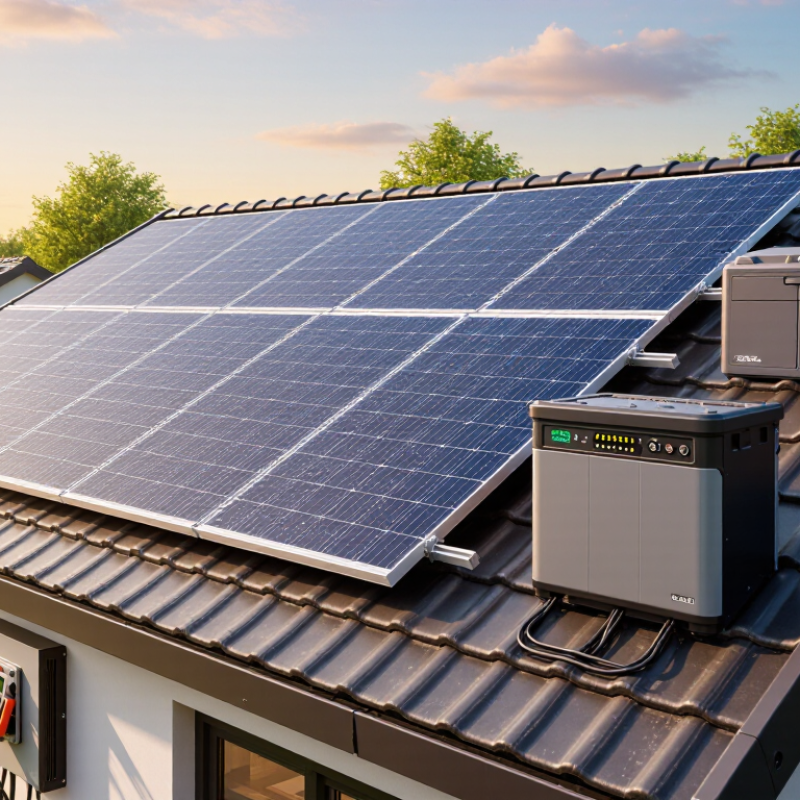
Solar panel technology is changing the 2026 market in practical ways. N-type cells, including TOPCon and heterojunction designs, are improving efficiency and reducing performance loss over time. Back-contact panels also offer cleaner surfaces and stronger output in limited roof space. Bifacial modules can capture reflected light from bright roofs, gravel, or snow. However, their real benefit depends on installation height, ground brightness, and shading. More efficient does not always mean better value.
Tips: Compare annual energy yield, not only the efficiency percentage. Ask for temperature coefficients, degradation rates, product warranties, and independent test results. Check the installer’s roof assessment carefully. Small roof shadows can reduce output more than expected.
Perovskite-silicon tandem panels may attract attention in 2026, but availability and long-term field data remain uneven. They are promising, yet buyers should avoid paying mainly for laboratory potential.
Smart inverters, home batteries, and energy management software are becoming more important parts of a complete system. These tools can shift daytime generation into evening use and support flexible electricity planning. Still, battery economics vary by tariff, climate, and household habits. A large battery may sit underused. That is an easy mistake. Durability, repair access, recycling plans, and local certification also deserve close review before signing a contract.
Key Performance and Efficiency Standards for 2026 Panels
What Are the 2026 Top Solar Panel Solutions for Buyers?
For 2026, buyers should examine measurable performance rather than attractive efficiency claims. High-quality residential panels may reach efficiencies above 22%, but real output depends on heat, shading, roof direction, and installation quality. A panel producing well at 25°C can lose power on a hot summer roof. Check the temperature coefficient, where a lower negative percentage usually means better heat performance.
Look for testing under recognized IEC standards, including safety, mechanical load, and durability requirements. Compare output warranties, annual degradation rates, and resistance to moisture, salt mist, and potential-induced degradation. Bifacial panels can capture reflected light from bright roofs or ground surfaces, though their benefit may be limited on dark rooftops. Installation matters more than many buyers expect. A small shadow from a vent can reduce one section’s production for hours.
Tips: Request the datasheet, not just the sales brochure. Compare rated power, operating temperature, low-light performance, and warranty conditions. Ask an installer to model your roof using local weather data. Do not assume the highest efficiency delivers the fastest payback. Sometimes, a slightly less efficient panel with better heat tolerance and lower degradation is the wiser choice. I would also recheck estimated savings after accounting for dust, seasonal shade, and inverter losses. These details are easy to overlook, and predictions are never perfect.
What Are the 2026 Top Solar Panel Solutions for Buyers?
Key performance and efficiency standards for 2026 panels are increasingly centered on high module efficiency, strong temperature performance, durability, and long-term energy yield.
The chart shows representative midpoint efficiencies from typical commercial module ranges: conventional monocrystalline silicon modules generally achieve about 20.5–22%, TOPCon and HJT modules about 22–24%, IBC modules about 23–24.5%, and CdTe thin-film modules about 18–20%. Actual results vary by module design, operating temperature, installation conditions, and certification.
Comparing Residential, Commercial, and Portable Solar Solutions
What Are the 2026 Top Solar Panel Solutions for Buyers?
In 2026, residential solar favors efficient panels, home batteries, and smarter energy controls. These systems suit roofs with strong sunlight and stable electrical demand. A household may value quiet operation, backup power, and lower evening bills. Roof angle matters. So does shade from trees, chimneys, or nearby buildings. High efficiency cannot fix poor placement. Buyers should request a shade analysis, production estimate, installation warranty, and clear maintenance terms.
Commercial solar requires a different calculation. Large rooftops, parking canopies, and ground arrays can reduce daytime operating costs. Businesses should examine roof strength, load profiles, fire access, grid rules, and future expansion plans. A slightly lower-cost system may create higher expenses if repairs disrupt operations. Portable solar panels serve another purpose. They work well for camping, fieldwork, emergency charging, and temporary power. Their output is smaller, and cloudy weather can slow charging sharply. Portable systems are flexible, but they are not a substitute for a whole-building installation.
Tips: Compare usable energy, not panel size alone. Check battery capacity and recharge time. Ask who handles monitoring and repairs. Read performance guarantees carefully. Local installers can identify wiring or permitting issues early. Some online estimates look precise, yet real production varies with weather and site conditions. Reflect on your actual routine before buying. A portable kit may be enough for weekend use, while a business needs engineered capacity and documented safety checks.
| Solution Type | Typical System Size | Typical Panel Efficiency | Typical Annual Energy Output* | Installation Approach | Battery Compatibility | Space Requirement | Best Fit | Key Advantages | Important Buying Considerations |
|---|---|---|---|---|---|---|---|---|---|
| Residential rooftop solar | 3–10 kW | 18%–23% | Approximately 3,600–15,000 kWh | Roof-mounted, grid-connected installation with an inverter and electrical protection equipment | Usually compatible with home batteries and backup circuits | Approximately 18–60 m² of usable roof area | Detached homes, townhouses, and households with suitable roof exposure | Reduces grid electricity purchases, uses existing roof space, and can support backup power when paired with storage | Check roof condition, shading, orientation, local permits, utility interconnection rules, and expected household electricity use |
| Residential ground-mounted solar | 4–15 kW | 18%–23% | Approximately 4,800–22,500 kWh | Fixed ground structure or adjustable rack installed on private land | Well suited to larger battery systems and dedicated backup loads | Often 30–120 m², excluding access and setback areas | Properties with limited roof space or significant shading | Flexible placement, easier maintenance access, and potentially better solar orientation | Requires available land, structural foundations, local setbacks, drainage planning, and protection from vegetation or physical damage |
| Commercial rooftop solar | 30–500 kW | 18%–23% | Approximately 36,000–750,000 kWh | Engineered rooftop array with commercial inverters, monitoring, and electrical integration | Compatible with commercial battery storage and demand-management systems | Approximately 180–3,000 m² of usable roof area | Offices, retail buildings, schools, warehouses, and industrial facilities | Can offset daytime loads, reduce peak electricity purchases, and make productive use of large roofs | Evaluate roof loading capacity, remaining roof life, fire access, insurance requirements, demand charges, and interconnection capacity |
| Commercial carport solar | 100 kW–5 MW | 18%–23% | Approximately 120,000–7,500,000 kWh | Solar canopy installed above parking spaces, often with vehicle charging infrastructure | Suitable for batteries, electric-vehicle charging, and energy-management controls | Depends on parking capacity; requires structural clearance and vehicle circulation space | Campuses, shopping centers, workplaces, transport facilities, and public parking areas | Generates power without using building roof space and provides shade or weather protection for vehicles | Higher structural and civil-work costs may apply; assess drainage, lighting, accessibility, construction staging, and parking utilization |
| Utility-scale ground-mounted solar | 1 MW and above | 18%–24% | Approximately 1.2–1.5 GWh per MW annually | Large fixed-tilt or tracking array with medium-voltage collection and grid interconnection equipment | Can be paired with large-scale battery storage | Commonly about 4–10 hectares per MW, depending on design, terrain, and technology | Power generation projects, community energy programs, and large energy buyers | Economies of scale, centralized operations, and high total energy production | Requires land rights, environmental assessment, transmission access, permitting, long development timelines, and substantial capital |
| Portable solar panel kit | 100–400 W | 15%–23% | Approximately 120–600 kWh when used regularly in suitable sunlight | Foldable or lightweight panels deployed manually; normally connected to a portable power station | Designed for portable batteries; usually not intended for permanent home wiring | Approximately 1–3 m² when unfolded | Camping, travel, emergency charging, and small outdoor loads | Easy to transport, quick to deploy, and useful where grid electricity is unavailable | Output varies with weather, positioning, shading, cable losses, and battery capacity; verify connector compatibility and weather rating |
| Portable solar generator system | 200–2,000 W solar input; commonly 0.5–5 kWh battery capacity | Panel-dependent; commonly 15%–23% | Depends on panel input, sunlight, battery size, and conversion losses | Plug-and-play panels connected to an integrated battery inverter and charge controller | Integrated battery storage with AC, USB, and sometimes DC outputs | Usually 1–6 m² of deployable panel area | Short-term backup, remote work, medical-device support, and low-power appliances | Combines generation, storage, and power conversion in one system with simple setup | Confirm continuous and surge output, usable battery capacity, recharge time, noise level, operating temperature, and battery replacement policy |
| Solar water-pumping system | 0.5–20 kW, depending on pump and water head | 18%–23% | Site-dependent; commonly sized by daily water volume rather than household electricity demand | Solar array connected to a pump controller, with optional tank storage or battery backup | Often uses water storage instead of batteries; batteries may be added for continuous operation | Approximately 3–120 m² of panel area | Agriculture, livestock watering, remote properties, and irrigation applications | Can reduce fuel use and operate in areas with limited grid access | Size the system using pump power, flow rate, lift height, pipe losses, seasonal sunlight, water quality, and dry-run protection |
| *Annual output figures are planning ranges based on approximate system capacity and broad solar-resource assumptions. Actual production varies with location, climate, tilt, orientation, shading, temperature, system losses, maintenance, and operating conditions. A qualified installer should complete a site-specific assessment before purchase. | |||||||||
Evaluating Costs, Durability, Warranties, and Installation Needs
For 2026 buyers, solar value depends on more than the panel’s advertised efficiency. EnergySage’s 2024 Solar Marketplace Intel Report placed the average residential quote near $3 per watt before incentives. A 7-kilowatt system could therefore approach $21,000. Roof complexity changes that figure quickly. Dormers, steep pitches, long cable runs, and electrical upgrades add labor. A cheaper quote may still be expensive.
Durability deserves measurable evidence. NREL research commonly reports crystalline-silicon panel degradation near 0.5% annually. After 25 years, output may remain close to 88% of its original level, assuming normal conditions. That assumption matters. Coastal salt, heavy snow, extreme heat, and poor drainage can accelerate wear. Look for published IEC testing, third-party certification, and clear temperature coefficients. Numbers matter. Yet laboratory results cannot fully predict a shaded roof with dirty modules.
Warranty language needs careful reading. Many products advertise 25- to 30-year performance coverage, but workmanship protection may last only five to fifteen years. The installer’s insurance, licensing, and local service record can matter more than a glossy document. The IEA PVPS 2024 Trends report confirms solar deployment is expanding rapidly worldwide, increasing installer demand and supply-chain pressure. That growth does not guarantee quality. Ask who removes and reinstalls panels during roof repairs, how monitoring failures are handled, and whether batteries require separate ventilation or clearance. I would also request a site-specific production estimate. Generic calculators often ignore afternoon shade. That small omission can distort payback.
How to Select the Best Solar Panel Solution for Your Property
In 2026, the best solar panel solution depends on your property, not a popular specification. Begin with a roof inspection. Record its age, slope, usable area, and structural condition. A newer roof may support a long-term installation, while an aging roof could require replacement first. Shade changes everything. Nearby trees, chimneys, and winter shadows can reduce output more than expected.
High-efficiency monocrystalline panels suit properties with limited roof space. Bifacial panels may perform well above bright surfaces, such as light-colored roofs or ground mounts. Their benefits can be modest on dark, shaded roofs. Measure twice. Do not rely only on an online estimate. Ask for an hourly shade analysis and a realistic annual production forecast.
The electrical design matters equally. Microinverters can help when roof sections face different directions or receive uneven shade. A central inverter may be simpler for a uniform roof. Consider battery storage if evening electricity use is high or outages are common. Check usable capacity, warranty terms, temperature performance, and replacement costs. Certification and local installation permits should be verified independently. A qualified installer should explain roof loading, cable routes, maintenance access, and grid connection requirements in plain language. I would also compare estimates using the same assumptions, because projected savings can look impressive when degradation, financing, or service costs are missing. Be cautious. The cheapest proposal may not be the lowest-cost system over twenty years.
Related Posts
-
Ultimate Guide to Sourcing the Best Powers Solar Solutions for Your Business
-
Top Solar Panel Manufacturers for Global Buyers
-

Advancements in Solar Technology Setting New Industry Production Standards
-
10 Compelling Reasons Solar Power Leads to 200 Percent Energy Savings
-
Unlocking the Power of Solar Light for a Sustainable Future
-
How to Choose the Right Solar Power Technology?