
Why Choose an Electric Cargo Bike for Your Business?

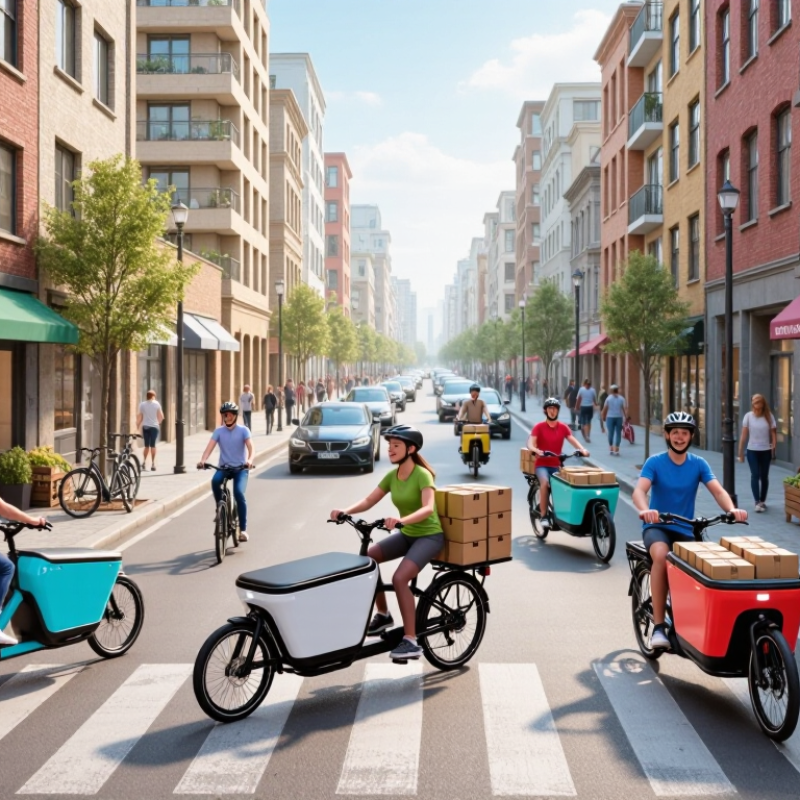
For many urban businesses, the delivery van is no longer the obvious choice. An electric cargo bike can move parcels, groceries, tools, and food through crowded streets with less noise and fewer parking delays. It also presents a visible commitment to cleaner, more human-scale transport.

Industry evidence supports this shift. Cycling Industries Europe reported strong growth in European cargo-bike sales in its 2022 Cargo Bike Industry Survey. The survey also identified business delivery as a major growth area. Transport for London’s delivery research found that cargo bikes could complete some central-city journeys faster than vans. They also produced substantially lower operational emissions. These findings matter, but they do not guarantee success everywhere.

A narrow street helps. A steep hill may not.

Urban mobility expert Mikael Colville-Andersen has called the cargo bike “the SUV of the bicycle world.” The comparison highlights its practical capacity, not luxury. Modern electric assistance can help riders carry heavier loads across longer routes. Businesses may reduce fuel costs, improve delivery visibility, and reach customers more directly.

The decision still requires careful planning. Battery range changes with weight, weather, hills, and riding speed. Secure overnight storage can also become an overlooked expense. A poorly chosen model may create frustration rather than efficiency. Businesses should test real routes, measure loading time, and compare total operating costs before purchasing.

This guide examines why an electric cargo bike can support business growth, where it performs best, and which limitations deserve honest attention.
Why Choose an Electric Cargo Bike for Your Business?

What Is an Electric Cargo Bike?

An electric cargo bike is a bicycle fitted with a motor, battery, and cargo-carrying structure. It moves through pedal power, while the motor adds assistance when the rider pedals. Most systems limit assistance at a set speed, preserving normal bicycle control. That distinction matters.

The cargo space may sit in a front box, on a long rear rack, or between the wheels. A delivery worker can carry parcels, tools, groceries, or service equipment close to the ground. On a typical route, the bike may handle narrow lanes, loading areas, and short stops more easily than a large vehicle. A throttle is not always included, so buyers should check the control system carefully. Small details matter.

Battery range depends on load weight, hills, tire pressure, temperature, and assistance level. A heavy load on steep streets can reduce range noticeably. Cold weather can weaken battery performance. Charging also needs a secure, dry location near the work schedule. Not magic.

Reliable business use requires routine checks. Operators should inspect brakes, tires, lights, fasteners, and battery connections before each shift. The frame should display a clear maximum load, and that limit should never be treated as a suggestion. Weather covers can protect goods, but they may affect balance in strong wind. Many buyers focus on motor power and overlook parking, maintenance, and rider training. That can be a mistake.

Why Choose an Electric Cargo Bike for Your Business? - What Is an Electric Cargo Bike?
Business consideration What an electric cargo bike is Potential business value What to check before choosing
Basic definition A bicycle designed to carry goods or passengers, fitted with an electric motor that assists pedalling. Combines human-powered travel with electric assistance for delivery and service trips. Check local rules for motor power, assisted speed, equipment, and where the bike may be ridden.
Cargo configuration Common layouts include longtail bikes with an extended rear rack, front-loading bikes with a cargo box, and tricycles with additional wheels. Different designs can suit parcels, tools, groceries, or passenger transport. Match the frame and cargo area to the size, shape, security, and handling needs of the load.
Payload and load handling Permitted loads vary by model and may include the rider, cargo, and accessories in the stated weight limits. A suitably rated bike can handle planned routes without requiring a motor vehicle for every short trip. Use the manufacturer's limits for total load and individual racks or boxes; account for how cargo affects braking and stability.
Motor assistance Most designs provide assistance while the rider pedals; controls and assistance modes vary. Electric assistance can help riders move cargo and manage hills or repeated starts. Test the bike with a representative load and route, and review charging, battery removal, and replacement arrangements.
Range and daily routes Usable range depends on factors such as battery capacity, load, terrain, weather, riding style, and assistance level. Route planning can help a business assign suitable trips and schedule charging. Evaluate range under realistic operating conditions rather than relying only on a best-case advertised figure.
Urban access A cargo bike uses cycle infrastructure where local laws and route conditions permit. It may be practical for short urban journeys where parking, congestion, or restricted vehicle access affects deliveries. Check permitted routes, loading locations, secure parking, and access rules in the areas where staff will work.
Operating costs Routine needs can include electricity, tyres, brakes, drivetrain servicing, and battery care. For suitable trips, a bike may reduce reliance on a larger vehicle and its associated fuel and parking needs. Compare total costs for the intended use, including purchase, maintenance, insurance, charging, and staff training.
Best-fit work Typically suited to trips with manageable distances, suitable roads or cycle routes, and loads within the bike's rated limits. Possible uses include local deliveries, mobile services, and moving supplies between nearby sites. Consider weather protection, cargo security, rider comfort, trip frequency, and whether another vehicle is needed for larger loads.

How Electric Cargo Bikes Support Business Operations

Electric cargo bikes can make daily business routes more predictable, especially where vans lose time searching for parking or sitting in traffic. Riders can carry tools, parcels, or food in weather-resistant boxes and stop close to customers. That matters for plumbers moving between nearby jobs, and for shops handling short-distance deliveries. Less loading drama.

The European Cyclists’ Federation’s 2018 cycle-logistics report estimated that cargo bikes could handle around 25% of urban commercial deliveries. That figure is a potential, not a promise for every company. Route length, hills, payload, battery range, and charging access all affect performance. A business should test its busiest routes before replacing vehicles. Keep a simple log: delivery time, distance, load, and battery use.

Electric assistance helps riders manage heavier loads and repeated starts, while smaller vehicles can ease access on narrow streets. The World Economic Forum’s 2020 report, The Future of the Last-Mile Ecosystem, projected a 78% rise in urban delivery demand by 2030. Cargo bikes may help absorb some growth without adding another van to every route. Still, they need secure storage, maintenance, and trained riders. A bike is not magic; bad dispatch planning remains bad dispatch planning.

Why Choose an Electric Cargo Bike for Your Business?

EU EPAC limits provide a practical reference for businesses planning electric cargo-bike operations. They define the maximum continuous motor power and the speed at which motor assistance must cut off.

These are EU regulatory limits for EPACs, not measures of cargo capacity or delivery performance. Source: Regulation (EU) No 168/2013, Article 2(2)(h).

Which Business Benefits Do Electric Cargo Bikes Provide?

Why Choose an Electric Cargo Bike for Your Business?

Which Business Benefits Do Electric Cargo Bikes Provide?

Electric cargo bikes can help businesses make short urban deliveries with less time lost in traffic and parking. A University of Westminster study of parcel deliveries in London found cargo bikes were 1.61 times faster than vans on selected routes and produced substantially lower delivery emissions. Results depend on route, load, and operating conditions, so they are not a guarantee for every business. Still, a bike carrying insulated food boxes or stacked parcels can often reach a customer while a van searches for a legal loading space. Lower fuel use and simpler routine maintenance may also reduce operating costs, though battery replacement and staff training belong in the budget.

Tips: Map your busiest short routes before buying. Test the bike with your real payload, including hills and frequent stops. Keep a backup plan for rain and unusually large orders.

Electric cargo bikes can also make local service more visible and approachable. A bakery or repair team arriving by bike may park close to the entrance and serve several nearby customers efficiently. The European Cyclists’ Federation’s CycleLogistics research estimated that 51% of motorised goods trips in European cities could potentially shift to cycling. That figure describes potential, not a promise. A bike may not suit every delivery, and I would reassess the route after a few weeks; real-world results can be messier than a pilot.

How to Choose the Right Electric Cargo Bike for Your Business

Choosing an electric cargo bike starts with the workday, not the catalogue. List typical parcel weights, daily distance, steepest route, and the narrowest doorway. Then measure the actual load: crates, tools, and rain covers all take space. A bike that looks roomy in a showroom may feel awkward on a crowded pavement. Test it on your real route, with a full load.

Match the frame and cargo layout to your deliveries. A front box can keep fragile items visible, while a longtail may fit better in tight storage spaces. Check rated payload, including rider and cargo, rather than judging capacity by box volume alone. Battery range depends on hills, temperature, load, and stop frequency, so allow a practical reserve. A short test ride is not enough.

There’s a trade-off. The World Economic Forum’s 2020 report, The Future of the Last-Mile Ecosystem, projected 36% more delivery vehicles in major cities by 2030, alongside rising emissions and congestion. That forecast makes compact delivery options worth evaluating, but it does not prove every business will save money. Compare purchase, charging, maintenance, insurance, and staff time against your current deliveries. Ask a mechanic about local servicing, too. Small detail, big difference. My own weak point in planning is often storage: a bike must be secure and easy to charge between shifts.

What Costs and Practical Factors Should Businesses Consider?

Why Choose an Electric Cargo Bike for Your Business?

For many urban businesses, an electric cargo bike can reduce delivery costs and avoid traffic delays. The purchase price is only one part of the decision. Businesses should also budget for charging equipment, battery replacement, insurance, maintenance, secure parking, and staff training. A durable cargo bike may cost more initially, but poor-quality components can create expensive downtime.

Payload needs careful attention. A bakery may carry light boxes, while a repair service may transport tools and spare parts. Measure the cargo area before buying. Study your daily route, including hills, narrow streets, weather, and charging access. Local traffic rules and commercial requirements may also affect operations. A simple route trial can reveal problems that a spreadsheet misses. Our first cost estimate may look too optimistic if unpaid loading time is ignored.

Tips: Track every delivery for two weeks. Record distance, load weight, charging time, maintenance, and delays. Compare these figures with fuel, parking, and vehicle costs. Train riders to inspect brakes, tires, lights, and battery connections before each shift. Keep a backup plan for heavy rain or battery faults. It is easy to overestimate savings. A realistic review should include lost work time, replacement parts, and seasonal demand. Test one vehicle before expanding the fleet.

Go to Top