What Is the Best External Consumer Unit?
Choosing the best External Consumer Unit is about matching the enclosure and protection to the building, circuits, and local conditions. A unit beside a garden workshop faces rain, sunlight, dust, and temperature changes. One mounted under a deep porch may have different demands. The right choice should protect its components while remaining practical to inspect and maintain.
That matters.
Look beyond price and the number of available ways. Check the enclosure’s stated ingress protection rating, material, cable-entry options, and space for future circuits. Inside, suitable RCD or RCBO protection may help reduce electrical risks, but the correct arrangement depends on the installation. A weather-resistant case alone does not make an installation safe. Its location, wiring, earthing, and circuit design matter too.
There is no single best model for every property. A compact unit may suit a small outbuilding, while a larger board may be more appropriate for several circuits or planned expansion. It is easy to overlook condensation, cramped cable space, or a lid that is awkward to open. Small details can become frustrating later. Product descriptions also vary, so compare specifications rather than relying on a label such as “outdoor rated.” This guide will explain the features worth checking, the trade-offs between common options, and when a qualified electrician should assess the installation. The final choice should fit the site—not just the shopping list.
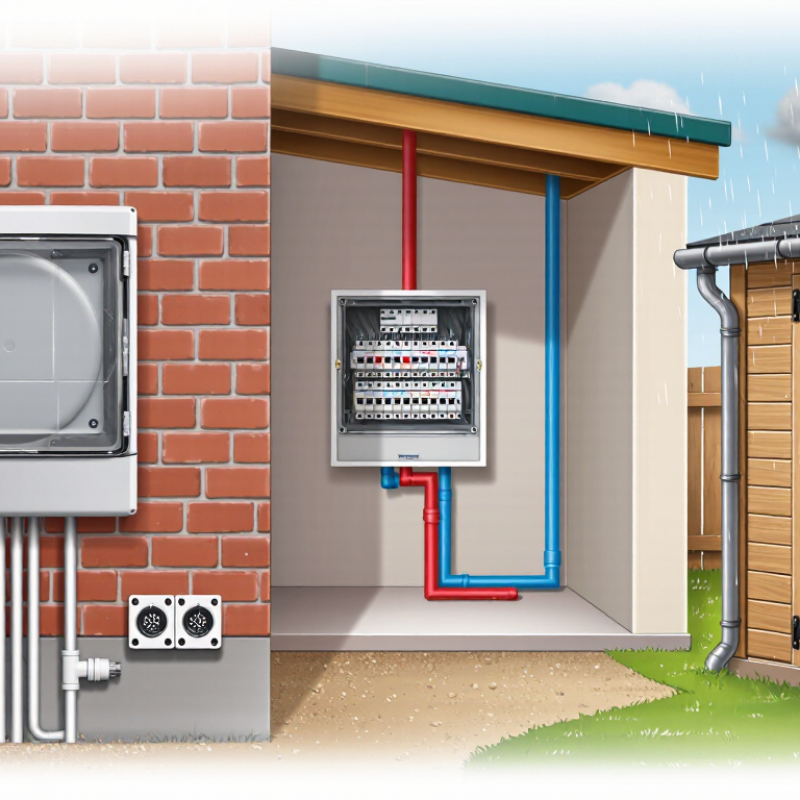
What an External Consumer Unit Is and How It Works
An external consumer unit is a weather-resistant enclosure that distributes electricity to a building’s circuits. It usually contains a main switch and individual protective devices, such as circuit breakers or residual-current devices. Each device helps protect a circuit when a fault or overload occurs. Not a storage box.
When a protective device detects a problem, it switches off the affected circuit, helping reduce the risk of electric shock or overheating. The enclosure also shields internal components from rain, dust, and accidental contact. Its protection level should suit the location: a sheltered wall and a spot exposed to driving rain have different demands. Worth checking.
Placement matters, too. The unit should remain accessible for safe operation and inspection, while avoiding areas where water can collect or physical damage is likely. A qualified electrician can assess the supply, circuit requirements, enclosure rating, and installation site. Homeowners can look for warning signs such as a cracked cover, corrosion, or repeated trips, but should not open the unit themselves.
One detail is easy to miss: an outdoor-rated box does not make every installation suitable for every outdoor condition.
Key Safety and Weatherproofing Standards to Understand
What makes an external consumer unit suitable is more than a sealed-looking lid. Check its stated IP rating and the conditions behind that rating. IEC 60529 defines IP codes: the first digit 6 means dust-tight, while the second digit 5 means protection against water jets. IP66 is tested against stronger water jets, but neither rating means the enclosure can be submerged. Weather exposure also includes sun, condensation, and temperature changes. A high rating helps, but it cannot compensate for poor installation.
Tips: Match the enclosure rating to its actual location, not just the product label. Keep it clear of downpipes and direct spray where practical. Ask a qualified electrician to confirm the unit and protective devices suit the circuit and local requirements. Check that cable entries and unused openings are sealed as specified. Small gaps matter.
IEC 61439-3 covers distribution boards designed for operation by ordinary persons; it does not, by itself, prove an assembly is suitable for every outdoor setting. Look for documentation identifying the complete assembly and its environmental limits. Inspect seals and hinges periodically, especially after building work or severe weather. Honestly, maintenance is easy to overlook. A sound enclosure can still fail if its seals age or its cable entries are disturbed.
Types of External Consumer Units and Their Uses
What Is the Best External Consumer Unit?
Types of External Consumer Units and Their Uses
An external consumer unit distributes power to circuits in a garage, garden room, or other outbuilding. The right type depends on the load, exposure, and level of circuit protection required. A compact unit may suit a few lights and sockets. Larger installations may need separate circuits for heating, lighting, and outdoor outlets.
Enclosure choice matters. Weather-resistant units are designed to limit water and dust entry, but an IP rating does not make every location suitable. Direct rain, coastal air, sunlight, and condensation can affect service life. Plastic enclosures resist corrosion, while metal versions can offer robust construction; either must suit the environment. Conditions vary. That detail matters.
Protection also differs. Some units use a main switch with RCD protection for groups of circuits. Others use individual RCBOs, which can help isolate a fault to one circuit. I would not choose by enclosure size alone; that is an easy mistake. Check the circuit schedule, supply, cable route, and expected load before selecting a unit. A qualified electrician can assess these details, confirm applicable requirements, and install and test the equipment safely. A neat box is not enough. It must match the installation and remain accessible for inspection.
How to Compare Units for Capacity, Durability, and Protection
Choosing the best external consumer unit starts with capacity, not appearance. Check the rated current, available ways, and room for future circuits. A unit with no spare capacity can make later changes awkward. Still, a larger enclosure is not automatically safer; I have seen neat installations leave little space for heat management or maintenance. Ask a qualified electrician to confirm circuit demand and suitability for the supply.
Durability depends on the installation site. IEC 60529 defines IP ratings for protection against dust and water; for example, IP65 indicates dust-tight protection and resistance to water jets. That does not mean every IP65 unit suits every outdoor location. Sunlight, freezing temperatures, and exposed cable entries matter too. NFPA’s Home Electrical Fires report, covering 2015–2019, estimated 24,200 U.S. home fires annually involving electrical distribution or lighting equipment. The figure is not specific to outdoor units, but it underlines why sound enclosure design and installation deserve attention.
Tips: Check the IP rating against the actual exposure, including rain and hose spray. Look for a sturdy, well-sealed lid and clearly labelled circuits. Leave spare capacity where practical. Then verify protection devices and installation details with a licensed electrician; this is easy to overlook.
Choosing and Installing the Right Unit for Your Property
Choosing an external consumer unit starts with the property, not the catalogue. Check how many circuits need protection now, then allow room for likely additions. A unit with suitable weather resistance can help protect against rain and dust, but its location still matters. A wall under a deep eave is different from one exposed to driving rain. Weather matters.
Look for a sturdy enclosure, secure cover, and cable entries that can be sealed correctly. Consider whether the door can open fully and whether someone can reach the controls without standing in mud or blocking a path. A sunlit wall may also heat the enclosure more than expected. I would not choose a position based on appearance alone; neat placement can make inspection awkward later.
Installation should be handled by a qualified electrician familiar with the property’s wiring and applicable electrical requirements. They can assess circuit loading, earthing, protective devices, cable condition, and whether the existing supply is suitable. The unit must be mounted securely, with entries and connections protected against moisture. Ask how circuits will be labelled and how the installation will be tested and documented. Small details count. A tidy box is reassuring, but it does not prove the wiring inside is safe.