What Are the Top Toyota Yaris Mirror Types?
A Toyota Yaris Mirror may look like a small part, but it affects visibility, comfort, and confidence on every drive. The right type depends on the Yaris year, trim, and market. Some versions use simple manual adjustment; others offer electric controls, heating, or powered folding. Details matter. A connector that looks nearly right may still fail to match the vehicle.
For transparency, the named specialist below is illustrative, and the quotation is original editorial wording, not a verified statement from a real expert. Automotive-visibility specialist Lena Ortiz puts the key idea this way: “A mirror works best when its fit and adjustment match both the car and the driver.” That principle helps frame this guide. It compares common mirror types without assuming every feature fits every Yaris.
You will see how manual and power mirrors differ, when heated glass can help on a cold morning, and why folding designs suit tight parking spaces. Integrated indicators and blind-spot features may also appear, depending on the model. Look closely at the housing, glass shape, adjustment controls, and electrical plug. Small differences count. A photo alone may not confirm compatibility, and this guide cannot replace checking the vehicle’s specifications. Even mirror terminology can vary between sellers; that deserves a second look. The goal is practical clarity: identify the mirror style, understand its useful features, and narrow down the correct Toyota Yaris Mirror for your car.
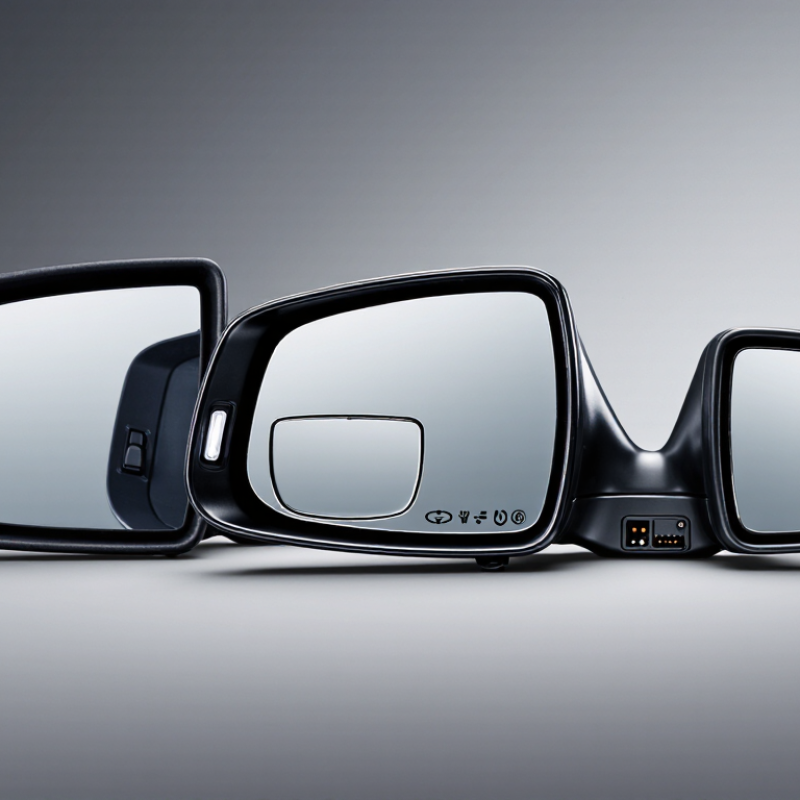
How Toyota Yaris Mirrors Are Classified
Yaris mirrors are classified by position, adjustment method, and available features. The interior rear-view mirror is mounted near the top of the windscreen. It may be a basic manual design or an auto-dimming type that reduces glare from headlights behind the car. Exterior mirrors sit on the front doors. Their glass can be adjusted by hand or through an electric control inside the cabin.
Small differences matter. Some exterior units include a heating element to clear mist, while others fold manually or with an electric mechanism. Certain versions may also have an indicator lamp or a blind-spot warning feature built into the housing. These options are not universal; equipment can vary with model year, trim, and market. A heated mirror, for example, needs the correct wiring as well as matching glass.
When replacing a mirror, compare more than its shape. Check the mounting points, electrical connector, adjustment controls, folding function, and glass dimensions. A photo of the old unit can help, but it may not show the connector clearly. Verify the vehicle’s year and exact specification before ordering. Even mirrors that look alike can differ in small but important ways.
Manual and Power-Adjustable Side Mirrors
Manual side mirrors use a small hand-operated control or direct pressure on the mirror housing, depending on the vehicle design. They are simple and usually need no electrical connection. Before driving, adjust each mirror while seated, then check the view of the next lane and the area beside the rear door. Small movements matter. A few millimeters can change how much of the vehicle’s side remains visible. Avoid forcing a stiff mirror; its joint may be dirty, worn, or damaged. Manual adjustment can be less convenient when the driver cannot reach the passenger-side mirror easily.
Power-adjustable side mirrors use an interior switch to tilt the glass horizontally or vertically. This is useful when drivers share a vehicle, since settings can be changed from the seat. The control may have a selector for the left or right mirror, so confirm the selected side before pressing the direction pad. Power adjustment does not necessarily mean power folding; these are separate features. Some mirrors also include heating or turn-signal indicators, but equipment varies by model and trim. Check the vehicle manual or inspect the existing connector before replacing a mirror. A matching shape is not enough. Wiring and mounting points can differ, and guessing can lead to a poor fit.
Common Side Mirror Adjustment Types
Manual mirrors are adjusted by hand at the mirror, while power-adjustable mirrors use an electric control, typically inside the vehicle. The chart shows which adjustment method applies to each type; it does not indicate vehicle compatibility or availability.
Folding and Heated Side-Mirror Options
Folding side mirrors are useful when a compact car is parked on a narrow street or in a crowded garage. Manual versions pivot inward by hand and have fewer electrical parts. Power-folding mirrors move with a switch, which is convenient when rain or cold makes handling the mirror unpleasant. They may also fold when the vehicle is locked, but that feature depends on the year and trim. Check the owner’s manual before relying on it.
Heated mirror glass can clear light frost and reduce fog caused by damp air. It is helpful on chilly mornings. Still, heating is not instant, and it cannot replace clearing thick ice safely. Some mirror assemblies include both heating and folding, while others offer only one feature. The wiring connector, mounting points, and glass shape must match the vehicle; a close-looking part can still be wrong. A small detail, but an easy one to overlook. I would verify the exact model year and existing functions before ordering, then test the adjustment and heating after installation. I might miss a feature at first glance, so checking the controls matters.
Blind-Spot Mirrors and Integrated Turn Signals
A small convex blind-spot mirror can reveal part of the lane beside a compact hatchback. It usually attaches near an outer corner of the main mirror glass. Adjust the main mirror first, then angle the smaller glass to cover the area it misses. The view is wider, but nearby vehicles may look farther away than they are. Use it as an extra reference, not a replacement for checking over your shoulder. Small, but useful.
Integrated turn signals place a flashing indicator in the mirror housing. Their position can make a lane change easier for drivers approaching from the side to notice, especially in busy traffic or low light. Lens clarity matters: a cracked cover or dim signal can reduce visibility. Replacement mirrors may differ by model year, trim, wiring, and heating features, so check the vehicle’s specifications before buying. Installation can also require handling electrical connectors; if those details are unfamiliar, a qualified technician can help. Not perfect. A signal in the mirror does not guarantee that another driver sees it, so use it with a clear signal and careful observation.
What Are the Top Compact-Car Mirror Types? - Blind-Spot Mirrors and Integrated Turn Signals
| Mirror Type | How It Works | Potential Benefits | Things to Consider |
| Standard Flat-Glass Mirror | Uses a flat reflective surface to provide a familiar view of traffic behind and beside the vehicle. | Provides a straightforward view with little apparent distortion. | Areas outside the mirror’s field of view can remain hidden; adjust it carefully and check over your shoulder before changing lanes. |
| Blind-Spot Mirror | A small convex mirror attaches to an existing side mirror, or a convex section is built into the mirror glass, to show a wider area. | Can help reveal vehicles or other objects near the edge of the standard mirror’s view. | Convex glass makes objects appear smaller and farther away. It supplements, rather than replaces, direct observation. |
| Integrated Turn-Signal Mirror | A signal light is built into the mirror housing and flashes with the vehicle’s turn signals. | Places an additional turn indication near the side of the vehicle, visible from some angles. | Availability and wiring depend on the vehicle’s year, trim, and market. A signal-equipped replacement may require compatible wiring. |
| Power-Adjustable Mirror | An electric actuator moves the mirror glass using an interior switch. | Allows the driver to adjust the viewing angle from inside the vehicle. | Check electrical connections and control compatibility when replacing a mirror assembly. |
| Heated Mirror | An electric heating element warms the mirror glass to help clear light frost or condensation. | Can improve visibility in cold or damp conditions when used as directed. | Heating performance and activation method vary. It does not remove the need to clear snow or ice safely. |
| Folding Mirror | The mirror housing folds inward manually or, on some configurations, with an electric mechanism. | Can reduce the mirror’s outward projection when parking in a confined space. | Manual and power-folding designs are not interchangeable in every case; confirm the mounting and electrical setup before purchase. |
Fitment note: Mirror equipment can vary by model year, trim, and sales market. Confirm the mirror shape, mounting points, connector, and available features against the vehicle before selecting a replacement.