
Top 10 Solar Panel Lights for Outdoor Use
Outdoor solar lights promise a simple upgrade: safer paths, brighter steps, and no new wiring. Yet performance depends on details that product photos rarely show. A panel shaded by a porch roof may gather too little energy. A small battery can fade before dawn. The best choice depends on where the light will sit and what it needs to illuminate.
Inventor Thomas Edison, an early advocate of solar power, is often quoted saying, “I’d put my money on the sun and solar energy. What a source of power!” His optimism is inspiring, though a garden light still has to manage shade, weather, and limited battery capacity. Bright claims deserve a closer look.
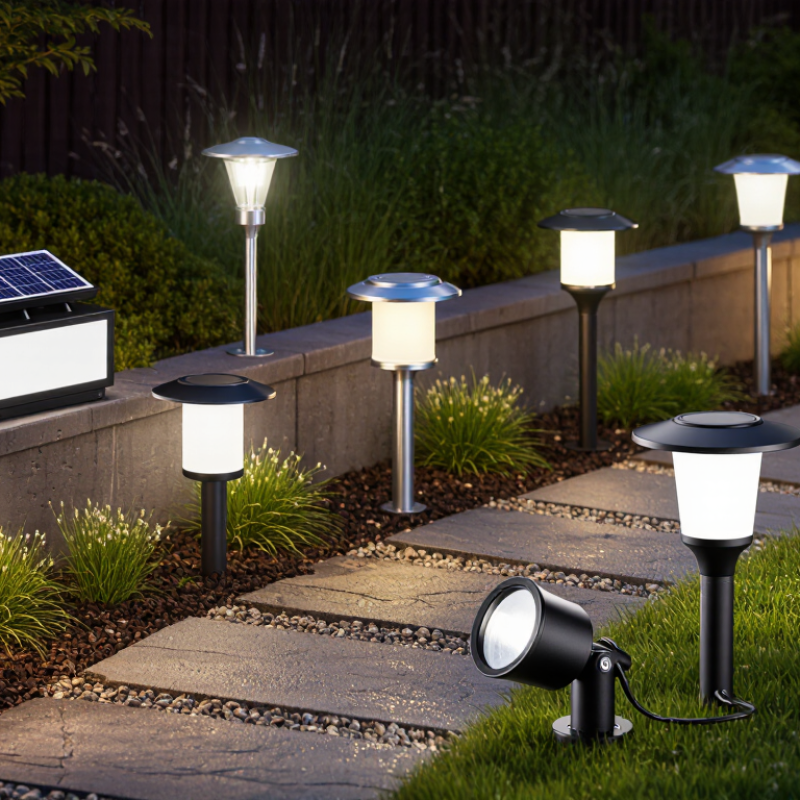
This guide compares 10 outdoor Solar Panels Light options by practical features, including panel placement, runtime, brightness, weather resistance, and installation. A warm pool of light across a stone path feels different from a sharp beam aimed at a garage entrance. Those differences matter. So does the trade-off between a separate panel, which offers flexible placement, and an all-in-one fixture, which is easier to mount.
Specifications help, but they do not tell the whole story. Real results vary with season, sunlight, and setup. Use this shortlist to match each fixture to its location, then check the product details before buying. A small caveat: even a well-rated light may disappoint in deep shade.
What Solar Panel Lights Are and How They Work
Solar panel lights convert daylight into electricity through photovoltaic cells. The cells produce direct current, which a charge controller directs to a rechargeable battery. After dusk, a light sensor switches on the LED, using stored energy. Simple in principle. In practice, performance depends on panel size, battery condition, shade, and hours of sun. A small panel under a leafy eave may not fully recharge after a cloudy day.
The U.S. Department of Energy’s Solar Photovoltaic Cell Basics explains how photovoltaic cells convert sunlight into electricity. For broader industry context, IEA PVPS’s Snapshot of Global PV Markets 2024 reports that cumulative global solar PV capacity exceeded 1.6 terawatts by the end of 2023. That figure reflects large-scale adoption, not a guarantee that every garden light will shine all night. Small outdoor units have limited panel and battery space. I’d check charging conditions before judging brightness.
Tips: Place the panel where it gets direct sun, and wipe dust from its surface. If the light dims early, check for shade and allow a full sunny day to recharge it.
| Rank | Light Type | Typical Outdoor Use | Typical Brightness | Solar Panel and Battery | Typical Nighttime Operation | Useful Features |
|---|---|---|---|---|---|---|
| 1 | Motion-activated security floodlight | Driveways, garages, and entrances | Approximately 600–2,000 lumens | Usually a separate or attached panel; rechargeable lithium-ion battery is common | Often stays dim or off, then brightens when motion is detected; operating time depends on activations and sunlight | Adjustable motion sensor, multiple light heads, and a panel that can be positioned for better sun exposure |
| 2 | Solar path light | Walkways, garden borders, and steps | Approximately 5–50 lumens per light | Small built-in panel and rechargeable battery | Commonly designed to provide several hours of low-level illumination after a full charge | Stake or ground-mount installation; spaced lights can mark a route without wiring |
| 3 | Solar wall light | Porches, fences, and side entrances | Approximately 20–300 lumens | Integrated panel and rechargeable battery | May operate continuously at low brightness or switch on at dusk and respond to motion | Wall mounting, dusk-to-dawn sensor, and motion-sensing options |
| 4 | Solar landscape spotlight | Highlighting trees, walls, or garden features | Approximately 50–300 lumens | Integrated or separately connected panel with a rechargeable battery | Typically provides focused accent lighting for part or all of the night, depending on charge and brightness setting | Adjustable beam direction and ground stake; some models allow separate panel placement |
| 5 | Solar string lights | Patios, pergolas, and outdoor dining areas | Usually about 1–10 lumens per bulb; total output varies by bulb count | Small panel connected to a battery pack | Often designed for several hours of decorative lighting after a sunny day | Flexible placement, decorative bulbs, and commonly available steady or flashing modes |
| 6 | Solar lantern | Patios, balconies, and camping areas | Approximately 20–200 lumens | Built-in panel and rechargeable battery, or a panel connected by cable | Runtime varies with brightness; lower settings generally use less stored energy | Portable designs, handle or hanging loop, and diffuse light for nearby areas |
| 7 | Solar deck and step light | Deck edges, stair risers, and railings | Approximately 2–30 lumens | Compact built-in panel and rechargeable battery | Usually provides low-level guidance lighting after dark | Low-profile mounting and downward-facing light to reduce glare |
| 8 | Solar post-cap light | Fence posts, deck posts, and gate columns | Approximately 5–50 lumens | Panel commonly built into the top; rechargeable battery stored inside | Typically turns on automatically at dusk and provides decorative or marker lighting | Designed to fit particular post dimensions; check the mounting size before installation |
| 9 | Solar shed or utility light | Sheds, workshops, and covered outdoor storage areas | Approximately 100–800 lumens | Often uses a remote panel connected to an indoor or sheltered battery-and-light unit | May use a pull switch, motion sensor, or remote control; performance depends on the available charge | Remote panel placement can help when the light itself is installed in a shaded location |
| 10 | Solar area or pole light | Large yards, parking areas, and open paths | Approximately 500–3,000 lumens | Larger panel and higher-capacity battery than small decorative lights | May dim overnight or use motion control to conserve stored energy | Broad light distribution; installation height and panel orientation affect coverage and charging |
| What solar panel lights are and how they work: A photovoltaic panel converts sunlight into electrical energy. A rechargeable battery stores that energy during the day and powers the light after dark. Many outdoor models use a light sensor to switch on at dusk, while motion-sensing models increase brightness when movement is detected. Actual brightness and runtime vary with panel exposure, season, weather, battery condition, and operating mode. The specifications above are typical category ranges, not guarantees for every light. | ||||||
Related Posts
-
Why Choose Solar Power Light for Sustainable Outdoor Illumination?
-

Unlock the Potential of Solar With Light Innovations for Sustainable Global Sourcing
-
7 Effective Strategies to Maximize Light Solar Product Sourcing
-

Unlocking the Power of Solar Light for a Sustainable Future
-
2026 Top Smart Solar Light Suppliers for Global Buyers
-
China Top Smart Solar Light Suppliers for Global Buyers?