
How to Choose the Right Electric Generator?

Choosing the right Electric Generator begins with the load, not the advertised wattage. A refrigerator, medical device, pump, or server rack can demand different starting power. Record running watts, starting watts, voltage, phase, and operating hours before comparing models. A simple spreadsheet is useful. Guesswork is not.

The International Energy Agency’s Electricity 2024 report highlights rising electricity demand and increasing pressure on grid reliability. The U.S. Energy Information Administration also identifies weather events and infrastructure limits as important reliability concerns. Meanwhile, the MarketsandMarkets Diesel Generator Market report tracks continued demand across construction, healthcare, data centers, and industrial facilities. These reports show the market direction, but they cannot choose your machine. Site conditions still matter.

Power-generation specialist Mike Holt states, “A generator must be sized for the load it actually serves, not the load someone imagines.” That principle deserves attention. Oversizing can waste fuel, reduce efficiency, and increase purchase costs. Undersizing can trip breakers, overheat components, or damage sensitive electronics. Neither choice is harmless.

Consider a 7.5-kilowatt pump starting beside a 3-kilowatt lighting circuit. The combined running load may look manageable, yet the motor’s starting surge can change the decision. Fuel type, noise limits, transfer-switch compatibility, ventilation, maintenance access, and emissions requirements also deserve review. Portable units are convenient. Permanently installed systems offer faster, more reliable response.

There is no perfect shortlist. A careful choice may still need revision after an electrician measures the real site. That is not failure. It is responsible engineering.
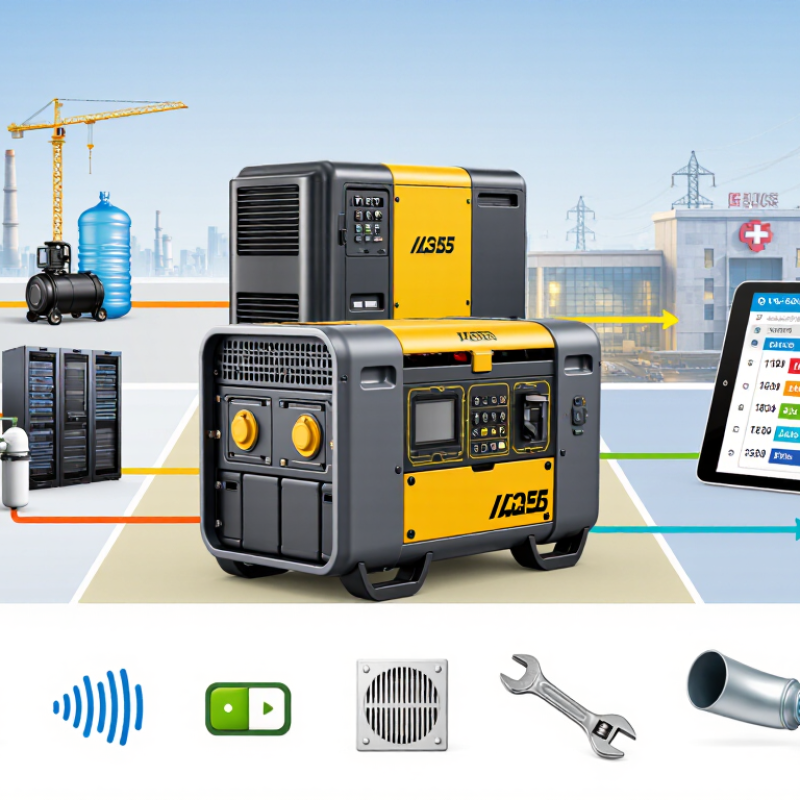
How to Choose the Right Electric Generator?

Define Your Generator’s Intended Uses and Power Requirements

Before choosing an electric generator, define what it must do. A refrigerator, sump pump, medical device, and work light have different demands. Write down each appliance, its running watts, and its starting watts. Starting demand can briefly double or triple the running load. That short surge matters. I once saw a small generator handle lights comfortably, then stall when a pump started.

Add the appliances you may use at the same time. Do not simply total every device in your home. During an outage, you might power the refrigerator, a router, two lamps, and a phone charger. A portable generator rated around 3,000 running watts may suit that limited setup, depending on starting loads. Check the data plates and instruction manuals carefully. Estimates can be wrong.

Choose a unit with separate continuous and peak watt ratings. Leave a practical reserve, often 20 to 25 percent, for motor startup and unexpected needs. Sensitive electronics may require stable power and proper grounding. A licensed electrician should install any transfer equipment connected to household circuits. Operate portable equipment outdoors, far from doors and windows. Never rely on guesswork with carbon monoxide. I still prefer measuring actual loads when possible, because advertised household needs rarely match real evening use.

Compare Generator Types, Fuel Sources, and Operating Features

Choosing the right electric generator starts with matching its design to your actual workload. Portable generators suit tools, outdoor work, and short outages. Standby generators connect to a building and start automatically when utility power fails. Inverter generators usually provide cleaner, steadier electricity for sensitive devices, such as laptops and medical equipment. However, their lower noise and compact size often come with higher purchase costs.

Fuel choice changes operating cost, storage needs, and maintenance. Gasoline is widely available, but it can degrade during long storage. Diesel often supports heavy, frequent use, though the equipment may be louder and heavier. Propane stores well and burns cleanly, while natural gas offers convenient continuous supply where a suitable connection exists. Check local installation rules before connecting any fuel system. Guessing here can create serious safety problems.

Tips: Add the wattage of essential appliances, then include extra starting power for motors. Look for runtime at a realistic load, not only the advertised maximum. A fuel gauge, low-oil shutdown, overload protection, and an automatic transfer switch can improve daily operation. Test the generator under load every few months. I once underestimated refrigerator startup demand, and the unit tripped repeatedly. That mistake showed me that a simple wattage list is not enough. Noise matters too, especially near bedrooms or neighboring homes. Choose a dry, ventilated location, and keep extension cables rated for the generator’s output.

How to Choose the Right Electric Generator?

Compare generator types, fuel sources, and operating features

Inverter Generators

Produce stable electricity with low noise and good fuel economy, making them suitable for sensitive electronics and light-duty applications.

Conventional Portable Generators

Usually provide higher starting power at a lower purchase cost, but they are generally louder and less fuel-efficient at light loads.

Standby Generators

Are permanently installed and can start automatically during a power outage. They are designed for extended backup operation.

Fuel Selection

Diesel and gasoline contain more energy per liter than LPG. LPG stores cleanly and does not degrade like gasoline, but it provides less energy by volume.

The chart shows approximate lower heating values of common generator fuels. Actual runtime depends on generator efficiency, electrical load, ambient conditions, and maintenance.

Calculate the Required Capacity and Allowance for Future Loads

Choosing the right electric generator begins with a measured load list, not a guess based on building size. Record each appliance’s running watts and starting watts from nameplates or manuals. Refrigerators, pumps, compressors, and motors may demand two to seven times their running power during startup. Add lighting, controls, chargers, and essential outlets separately. Keep a simple spreadsheet.

Suppose a site needs 3,200 running watts, while the largest motor adds 1,800 starting watts. Do not automatically add every starting figure, because equipment may start at different times. A technician can model the worst likely combination, then verify it with a clamp meter when possible.

In this example, the practical peak may reach 5,000 watts. Choose a generator with enough continuous output for the steady load and enough surge capacity for that peak. Check its power factor rating in kilovolt-amperes. Watts alone can mislead.

A 20 to 30 percent operating margin helps reduce overheating and nuisance trips. More reserve is not always better; oversized units may run lightly loaded and waste fuel.

Future demand deserves a separate line. Add planned refrigeration, tools, pumps, or electric heating, then estimate realistic running and starting needs. For a small workshop, 1,000 watts of future tools may justify a 1,300-watt allowance. A first-pass estimate can still be wrong. Leave room for uncertainty. Label assumptions and review them annually. Consult a qualified electrician for transfer equipment, grounding, and local requirements. Keep life-safety loads separate from convenience loads when capacity is limited.

Evaluate Safety Systems, Noise Levels, Portability, and Maintenance

Safety systems deserve more attention than peak wattage. The U.S. Consumer Product Safety Commission’s 2023 report estimated 99 annual carbon-monoxide deaths linked to portable generators from 2011 to 2021. Choose a model with tested carbon-monoxide detection, automatic shutdown, overload protection, and ground-fault protection. Read the operating instructions carefully. A sensor can fail, and poor placement can defeat it. Never use a generator in a garage, shed, or enclosed porch, even with the door open.

Noise affects sleep, conversation, and nearby residents. NIOSH recommends limiting occupational exposure to 85 dBA over an eight-hour shift, while louder equipment reduces safe exposure time. Compare rated sound levels at a stated distance, not vague terms such as “quiet.” A compact inverter-style unit may sound gentler, but its cooling fan can become irritating at night. Stand beside the generator before buying, if possible. Numbers alone can mislead.

Portability is more than a wheel kit. Check dry weight, handle height, lifting points, and balance when the fuel tank is full. Then examine maintenance access. The U.S. Department of Energy advises regular inspection of filters, oil, fuel lines, and connections for engine equipment. Follow the service schedule, use fresh fuel, and run the unit periodically under load. Storage is often forgotten. That omission can cause hard starting months later. My judgment has changed: the easiest generator to move is not always the easiest to maintain. A slightly heavier unit with accessible drain points may create fewer unpleasant surprises.

How to Choose the Right Electric Generator? - Evaluate Safety Systems, Noise Levels, Portability, and Maintenance

Generator Category Typical Rated Output Typical Noise Level* Portability Important Safety Systems Maintenance Requirements Best Use Cases
Battery Power Station 300–3,000 W Approximately 25–55 dB(A), with no engine noise
  • Usually 3–35 kg
  • Easy to carry indoors or outdoors
  • Limited runtime at high loads
  • Overload and short-circuit protection
  • Over-temperature protection
  • Battery management system
  • Pure sine-wave output is preferable for sensitive electronics
  • Keep the battery charged periodically
  • Store in a cool, dry location
  • Inspect cables and connectors
  • Do not use or charge damaged battery packs
Small electronics, lighting, communication equipment, and short-duration backup power where quiet operation is essential.
Small Inverter Generator 1,000–2,500 W Approximately 48–60 dB(A) at a 7 m reference distance, depending on load
  • Usually 12–30 kg
  • Handle-based carrying
  • Compact fuel tank and limited continuous runtime
  • Low-oil shutdown
  • Overload and circuit-breaker protection
  • CO detection or CO shutoff may be available
  • Stable inverter output for electronics
  • Check engine oil before each use
  • Change oil according to the manual, commonly after the initial break-in and then at regular hour intervals
  • Clean or replace the air filter
  • Use fresh fuel and exercise the unit periodically
Camping, emergency lighting, laptops, small refrigerators, and other modest household loads.
Medium Portable Generator 3,000–7,000 W Approximately 60–75 dB(A) at a 7 m reference distance
  • Usually 45–100 kg
  • Wheels and folding handles are strongly recommended
  • Longer runtime than small portable units
  • Thermal-magnetic circuit breakers
  • Low-oil shutdown
  • Grounding terminal and engine overload protection
  • CO shutoff system is a valuable additional feature
  • Inspect oil, fuel lines, air filter, and spark plug
  • Drain or stabilize fuel for extended storage
  • Test-start monthly or as specified by the manufacturer
  • Keep cooling openings free of dust and debris
Refrigerators, sump pumps, power tools, selected heating equipment, and essential home circuits through a properly installed transfer system.
Dual-Fuel Portable Generator 3,000–8,000 W Approximately 65–78 dB(A) at a 7 m reference distance
  • Usually 50–115 kg
  • Wheels are normally required
  • Fuel flexibility improves emergency preparedness
  • Fuel shutoff and overload protection
  • Low-oil shutdown
  • Regulator and hose protection when using LPG
  • CO monitoring or automatic shutdown may be included
  • Maintain the engine as a gasoline unit
  • Inspect LPG hoses, fittings, and seals for damage
  • Run the generator on each available fuel periodically
  • Store cylinders upright and according to local regulations
Longer outages where gasoline availability may be uncertain and both liquid and gaseous fuel options are useful.
Large Portable or Towable Generator 7,000–20,000 W Approximately 70–85 dB(A) at a 7 m reference distance
  • Often 100–300 kg or more
  • Requires heavy-duty wheels, a trailer, or mechanical handling
  • Not suitable for frequent hand carrying
  • Overcurrent protection for multiple circuits
  • Low-oil and high-temperature shutdown
  • Emergency stop control
  • Proper grounding and distribution equipment are essential
  • Frequent oil and filter inspection
  • Battery charging and starting-system checks
  • Cooling-system and exhaust inspection
  • Service intervals should be documented by operating hours
Construction sites, farms, large workshops, and temporary power distribution with professional setup.
Residential Standby Generator 8,000–24,000 W Approximately 60–75 dB(A) at a 7 m reference distance, depending on enclosure and load
  • Permanent installation near a building
  • Not designed for routine manual relocation
  • Automatic transfer equipment is normally used
  • Automatic transfer switch
  • Overcurrent protection
  • Low-oil, high-temperature, and overspeed shutdown
  • CO protection and weather-resistant enclosure where provided
  • Scheduled professional inspections
  • Oil, filter, battery, and starting-system checks
  • Periodic automatic exercise cycle
  • Fuel-system and exhaust inspection
Automatic backup for essential household circuits or whole-home loads during extended utility outages.
Commercial or Industrial Generator 20,000–100,000+ W Approximately 70–90 dB(A) at a 7 m reference distance before additional acoustic treatment
  • Fixed, skid-mounted, or trailer-mounted
  • Requires site planning, lifting equipment, or a dedicated enclosure
  • Fuel storage and ventilation must be engineered
  • Engine control and monitoring system
  • Emergency stop and automatic shutdown functions
  • Generator breaker and selective overcurrent protection
  • Ground-fault, synchronization, and transfer controls where applicable
  • Planned preventive-maintenance program
  • Oil, coolant, fuel, battery, belts, and filters require scheduled inspection
  • Periodic load-bank testing may be necessary
  • Service should be performed by qualified technicians
Critical facilities, commercial buildings, data rooms, healthcare operations, and high-demand industrial applications.

Selection and safety note: Noise figures are typical approximate ranges measured at about 7 m under moderate load; actual sound levels vary with load, enclosure, installation, and measurement conditions. Never operate a fuel-burning generator indoors, in a garage, or near doors, windows, or air intakes. Use outdoor-rated extension equipment, maintain clearance from combustible materials, and have permanent connections installed by a qualified electrician in accordance with local electrical codes.

Check Installation Needs, Running Costs, Reliability, and Regulations

How to Choose the Right Electric Generator?

Check Installation Needs, Running Costs, Reliability, and Regulations

Choosing an electric generator starts with the installation site, not the advertised output. Measure available space, ventilation, cable distance, and access for maintenance. A basement may seem convenient, but poor airflow can create serious safety concerns. A qualified electrician should inspect the electrical panel and recommend a suitable transfer switch. Local permits and inspection requirements may also apply.

Calculate running costs before buying. Estimate fuel use at your expected load, not only at full capacity. Add servicing, oil changes, battery replacement, transportation, and occasional testing. A smaller unit may cost less initially, yet struggle with pumps, compressors, or heating equipment. An oversized generator wastes fuel and may operate inefficiently at light loads. Keep a simple monthly record.

Reliability depends on preparation and honest testing. Run the generator under a realistic load, check starting performance, and listen for unusual vibration. Test it during daylight, when faults are easier to identify. I once underestimated cable length, and the voltage drop affected sensitive equipment. That mistake changed my checklist. Ask for maintenance records, safety documentation, and clear warranty terms. Keep the generator dry, secure, and accessible, while following local noise and emissions rules. Regulations can differ between residential, commercial, and temporary installations, so confirm them with the relevant authority before installation.

Go to Top