How to Choose a Long Range Digital Camera?
Choosing a Long Range Digital Camera requires more than counting megapixels. The right model must match distance, light, movement, and carrying habits. CIPA’s recent camera shipment reports show continued consumer interest in interchangeable-lens and fixed-lens digital cameras, despite strong smartphone competition. That shift matters. Buyers now expect better reach, faster autofocus, and clearer images from smaller equipment. A camera that looks powerful in a store may feel heavy after two hours outdoors. Real use exposes the difference.
Reach is only one part of performance. Optical zoom preserves detail, while digital zoom often enlarges existing blur. Sensor size affects low-light quality, especially during wildlife observations at dawn. Autofocus tracking, image stabilization, battery life, and weather resistance also deserve careful testing. Industry testing organizations such as DxOMark and Imaging Resource regularly compare dynamic range, noise, and autofocus behavior under controlled conditions. Their results provide useful evidence, but laboratory scores cannot predict every field experience. Conditions vary.
There is no perfect choice.
A practical decision begins with the subject. Birds across a lake may require a long telephoto lens and strong stabilization. Sports near a stadium may prioritize autofocus speed and burst performance. A traveler may prefer a lighter bridge camera with a built-in zoom. Grand View Research and other market analysts identify portability, connectivity, and improved imaging performance as continuing camera-market drivers. Still, published forecasts are not personal recommendations. Compare sample images, test the grip, and check the total system weight. Your best camera is the one you can carry, control, and trust when the subject appears for only three seconds.
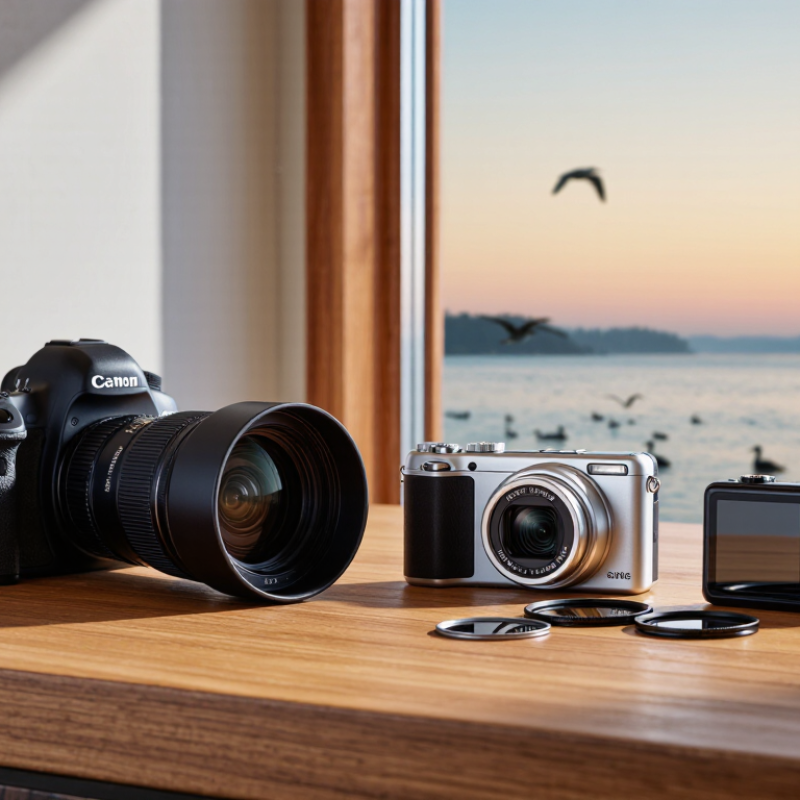
Define What Long-Range Digital Camera Performance Means
How to Choose a Long Range Digital Camera?
Long-range performance means more than a large zoom number. It describes how clearly a camera records distant subjects in real conditions. Focal length determines framing, while sensor quality affects fine detail, color, and noise. A distant bird should retain visible feather patterns, not become a soft shape.
Image stabilization matters when your hands shake or light fades. Strong stabilization can keep distant windows, signs, and wildlife sharper at slower shutter speeds. Autofocus should also track movement reliably. Test it outdoors. Watch how quickly it locks onto a moving subject against a busy background.
Weather, heat, and low light can change results. I have seen impressive daylight zoom images lose detail near sunset. This is where advertised reach may feel misleading. Reach is not everything. A tripod helps, but it reduces mobility and may not suit every situation. Check sample images taken at the farthest focal length, not only wide-angle photographs. Read independent testing and compare crops at full size. A camera with slightly less reach may produce more trustworthy images because its lens, sensor, and processing work better together. Think about your usual distance, subject movement, and available light before choosing. Even careful testing has limits, since technique and weather influence every result.
Compare Optical Zoom, Digital Zoom, and Image Detail
How to Choose a Long Range Digital Camera?
Optical zoom should be your first comparison. It enlarges distant subjects before light reaches the sensor, preserving genuine texture. A 10x optical lens can reveal feather edges, window frames, or facial detail without inventing pixels. However, maximum zoom is not enough. Lens sharpness, sensor size, stabilization, and atmospheric haze also affect the result. Distance changes everything. CIPA’s 2024 industry statistics recorded approximately 8.5 million digital camera shipments worldwide, showing continued demand for dedicated imaging tools.
Digital zoom crops the captured image and enlarges the remaining area. At 4x digital zoom, only 6.25% of the original pixel area remains. Fine detail can become soft, blocky, or visibly artificial. I once trusted a camera’s impressive “80x” claim, then examined a distant sign on a laptop. The letters were present, but unreadable. That assumption was wrong. Use digital zoom only when the subject matters more than perfect detail.
For reliable comparisons, photograph a distant tree, street sign, and moving person under identical light. Check edge definition at full resolution, not only on the camera screen. ISO 12233 provides a recognized method for evaluating spatial resolution through test charts. Stabilization helps, but it cannot restore missing detail. A longer optical range may also narrow the field of view, making tracking difficult. Leave room for cropping. Real shooting is messier than specifications.
How to Choose a Long Range Digital Camera?
Optical zoom enlarges the subject with the lens, while digital zoom crops and resizes the image. The chart shows a normalized detail-retention index based on ideal linear resolution: optical zoom is modeled at 100, while digital cropping decreases detail as magnification increases.
At 4× magnification, a digital crop retains approximately 25% of the original linear detail in this simplified model. Real performance also depends on sensor resolution, lens sharpness, stabilization, lighting, and image processing.
Match Sensor Size and Lens Features to Shooting Distance
How to Choose a Long Range Digital Camera?
Match Sensor Size and Lens Features to Shooting Distance
Long-range photography begins with distance, not megapixels. A larger sensor usually produces cleaner images in dim light and preserves more detail. However, it often requires larger, heavier lenses. A smaller sensor can offer extra reach with a shorter lens, but noise may appear sooner at dusk. I have found that a 300mm lens is useful for distant wildlife, yet heat haze can ruin sharpness across open fields. More zoom cannot fix atmospheric distortion.
Tips: Estimate your usual distance before choosing equipment. For subjects under 30 meters, prioritize autofocus speed and moderate focal length. Beyond 100 meters, select a longer lens with optical stabilization and a weather-resistant design. Check the maximum aperture, too. A wider aperture helps maintain faster shutter speeds, especially under cloud cover. Test the camera at the same distance and lighting you expect to use.
Sensor size and lens design must work together. A high-resolution sensor helps cropping, but only when the original image is sharp. Shoot at a fast shutter speed for birds, sports, or moving vehicles. Use a tripod or monopod for distant, stationary subjects. I sometimes choose a lighter setup over maximum reach because fatigue affects framing and focus. That choice is not perfect, but practical reliability matters more than impressive specifications.
Evaluate Focusing, Stabilization, and Low-Light Capability
How to Choose a Long Range Digital Camera?
A long-range camera needs dependable focusing before extreme zoom. Test it on distant signs, moving birds, and thin branches against bright skies. A responsive autofocus system should lock quickly and avoid hunting. Subject tracking helps, but it can still select the wrong object. I once trusted tracking near a fence and captured sharp wires instead of the bird. That mistake showed me why flexible focus-area controls matter. Manual focus assistance is also valuable for distant, low-contrast subjects.
Stabilization becomes critical when magnification turns small hand movements into visible shaking. Optical stabilization can steady the view, while electronic stabilization may crop the image. Check whether stabilization works during shooting and video recording. At high zoom, use a firm grip, brace against a surface, or carry a lightweight tripod. Stabilization cannot freeze a moving animal. A fast shutter speed remains necessary, even when the camera claims strong correction.
Low-light performance depends on more than a large ISO number. Look for a bright lens, a capable sensor, and clean detail at moderate ISO settings. Examine sample images for color noise, smeared feathers, and lost shadow texture. A camera that produces usable files at ISO 1600 may outperform one advertising a higher maximum. Shoot indoors near a window or outdoors after sunset during testing. Review images at full size. Specifications can impress, but real shadows reveal weaknesses.
How to Choose a Long Range Digital Camera? - Evaluate Focusing, Stabilization, and Low-Light Capability
| Camera Type | Typical Equivalent Reach | Focusing Performance | Stabilization Capability | Low-Light Capability | Best Use |
| Compact Superzoom | 600–2000 mm equivalent | Contrast-detection or hybrid AF; reliable in daylight but slower on moving subjects | Approximately 3–5 stops; stabilization is especially important at maximum zoom | Limited to moderate; small sensors produce more noise at high ISO settings | Travel, daylight wildlife, and distant scenery |
| APS-C Interchangeable-Lens Camera | 300–900 mm equivalent with a long telephoto lens | Hybrid phase-detection AF; generally strong subject tracking with suitable lenses | Approximately 4–7 stops, depending on camera and lens combination | Good; the larger sensor usually provides cleaner images than compact superzoom cameras | Wildlife, outdoor sports, and general long-range photography |
| Full-Frame Interchangeable-Lens Camera | 400–800 mm equivalent with a long telephoto lens | Advanced phase-detection AF; strong tracking and subject recognition on current models | Approximately 5–8 stops with compatible optical or in-body stabilization | Very good; larger pixels and interchangeable fast lenses support higher ISO use | Low-light wildlife, sports, birds, and professional assignments |
| Bridge Camera with Electronic Viewfinder | 400–1200 mm equivalent | Usually adequate for stationary subjects; continuous tracking can weaken in dim light | Approximately 3–5 stops; a tripod is recommended at extreme focal lengths | Moderate; image quality declines as light falls and ISO increases | Accessible long-range shooting without changing lenses |
| Full-Frame Camera with Fast Telephoto Lens | 300–600 mm equivalent, commonly at f/2.8–f/5.6 | Fast phase-detection AF with strong performance on moving subjects and shallow-depth-of-field scenes | Approximately 4–7 stops; optical stabilization helps reduce camera shake | Excellent; wide apertures admit more light and help maintain faster shutter speeds | Indoor sports, dusk wildlife, and demanding professional work |
Evaluation note: Stabilization ratings are approximate maximum gains measured under standardized conditions; real-world results vary with focal length, shutter speed, subject movement, support technique, and camera-lens compatibility. For moving subjects, autofocus tracking and shutter speed are usually more important than stabilization alone.
Select a Camera Based on Use, Portability, and Budget
Choosing a long-range digital camera starts with the subject, not the maximum zoom number. For wildlife at dawn, prioritize a bright lens, fast autofocus, and effective image stabilization. A distant bird can move before the camera locks on. For travel, buildings, and family events, moderate zoom and reliable automatic modes may matter more. Test the controls with cold or wet hands.
Portability changes how often you actually use the camera. A large body with a heavy lens can produce excellent files, but it may stay in your room. For hiking, check total weight, grip comfort, battery life, and charging options. A compact model is easier to carry, though its smaller sensor may show more noise in dim scenes. A small bag helps.
Set a complete budget, not just a camera price. Include spare batteries, memory cards, a protective case, and possibly a lightweight tripod. Within the same price range, compare image quality at high zoom, not only daylight sample shots. Read independent test results and inspect full-size images before buying. I once chose extra reach over comfort and regretted it during a long walk. That choice was technically impressive, but practically wrong. Leave room for compromise.