How to Choose an Industrial Vacuum Cleaner in 2026
Choosing an Industrial Vacuum Cleaner in 2026 starts with the material, not the machine’s price tag. Fine dust, metal chips, liquid spills, and production residues place very different demands on filters, airflow, capacity, and construction. A unit that performs well beside a packaging line may struggle in a machine shop. Details matter.
This guide uses a clearly labeled composite expert voice, not a real-person quotation. The fictional industrial hygiene engineer Mara Ellison offers this principle: “Match the vacuum to the dust, the task, and the workday—not just the floor area.” It is a useful starting point, but not the whole decision. Verify the manufacturer’s performance data, filter specifications, and maintenance instructions for the exact model. A confident sales claim is not a substitute for those details.
The sections ahead explain how to assess material type, pickup volume, filtration, container size, mobility, noise, and service needs. They also clarify when a wet-and-dry model makes sense and when a specialized dust collector may be more appropriate. Picture a crowded workshop aisle, a long hose, and a filter that needs frequent cleaning. Those small realities can change the right choice. There is no perfect machine for every site. Begin with the actual task, then compare models against it.
Understanding Industrial Vacuum Cleaner Types and Applications
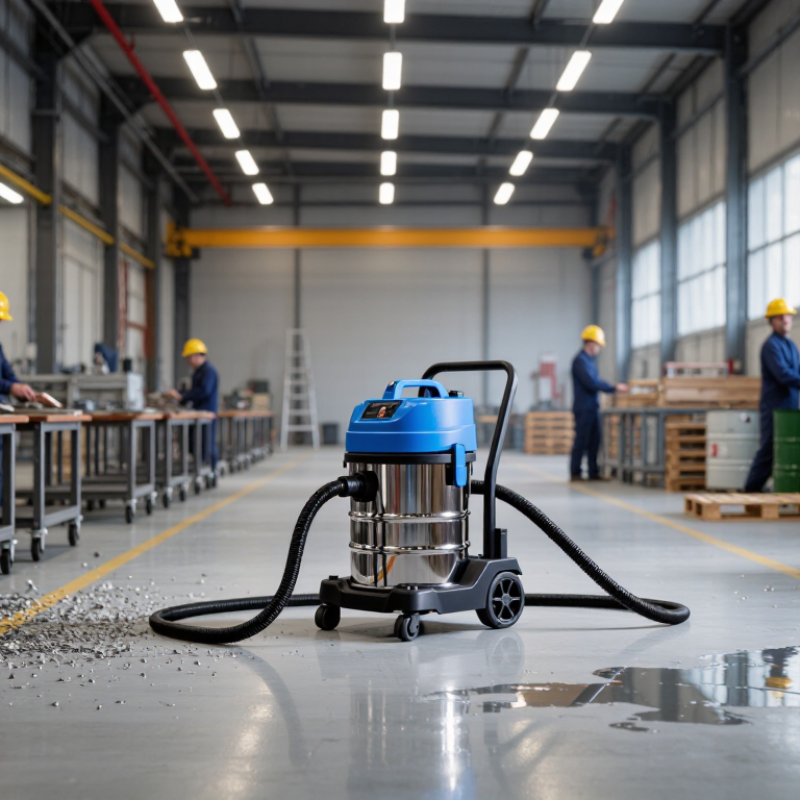
Industrial vacuum cleaners are built for different debris, duty cycles, and work areas. Dry units collect powders and chips in workshops; wet-dry models handle spills and damp residue. Central systems suit fixed production lines, while portable extractors can move between maintenance bays. Fine dust needs a sealed collection path and suitable filtration. A machine that looks powerful may still lose airflow when its filter loads.
Match the vacuum to the material and task. For mineral dust that may contain crystalline silica, NIOSH’s 2002-129 publication recommends an exposure limit of 0.05 mg/m³ as a time-weighted average. That figure is not a vacuum performance rating; it highlights why source capture and filter maintenance matter. Metal chips, oily residue, and fine powder also call for different collection arrangements. Check the material’s safety information and the machine’s specified use. The choice is not always tidy: a versatile unit may be less effective for one demanding task.
Tips: Compare airflow and static pressure at the hose, not just motor power. Check filter-cleaning access, container capacity, and disposal steps. Test the setup with the actual hose length and debris; small leaks are easy to miss.
Identifying the Materials and Hazards to Be Collected
Start with the material, not the machine’s advertised suction. Is the waste fine powder, coarse chips, liquid, or a mixture? Concrete dust can pass through weak filtration and return to the room. Metal shavings may cut hoses or damage a collection bin. Fibers can wrap around moving parts. These differences matter.
Check the safety data and process details for each material. Note particle size, moisture, temperature, and whether dust could ignite or harm workers if airborne. Fine combustible dust needs equipment designed and assessed for that specific hazard; an ordinary vacuum is not a safe substitute. Be precise here. Also consider what happens during emptying, when settled dust can become airborne again. A sealed collection system may be important.
Walk the work area and inspect the actual debris, not just a sample from a clean container. Ask operators what changes between shifts. One line may collect dry powder in the morning and damp residue later. That detail is easy to miss. A checklist helps, but it may not capture every process change. Confirm filtration, seals, hoses, and disposal arrangements against the material’s documented hazards, with a qualified safety professional when the risk is unclear.
Matching Airflow, Suction, Filtration, and Capacity to the Task
Choose an industrial vacuum by the material and tool, not by motor size alone. Airflow moves dust and debris through the hose; suction helps lift heavier material and overcome resistance. A long, narrow hose or a clogged filter can reduce performance at the pickup point. Test the setup.
Fine powders, wood chips, and wet debris place different demands on filtration and collection. Match the filter to the dust, and check that its rating suits the task. For fine dust, a suitable high-efficiency filter and a reliable seal matter; otherwise, particles may escape around the filter. That matters. Follow the equipment instructions for filter cleaning and replacement, since aggressive cleaning can damage some filter media.
Capacity affects how often work stops for emptying, but a larger tank is not always better. A container filled with dense debris can become difficult to move, while a bulky, light material may fill it quickly. Estimate both the volume and weight collected during a typical shift. It is easy to overvalue peak suction when comparing machines; hose length, nozzle shape, and filter condition also change what operators feel in daily use. Leave some margin, but avoid buying capacity that the crew cannot handle comfortably.
How to Choose an Industrial Vacuum Cleaner in 2026 — Matching Airflow, Suction, Filtration, and Capacity to the Task
Use this guide to compare typical starting ranges for common industrial cleaning tasks. Actual requirements depend on the material, hose length and diameter, pickup tool, operating conditions, and applicable safety rules.
| Task or Material | Typical Airflow Range | Typical Vacuum Pressure | Suggested Filtration Approach | Typical Container Capacity | Key Selection Considerations |
| General dry debris, chips, and workshop cleanup | 150–300 m³/h | 15–25 kPa | Cartridge or bag filter; select filter media suited to the particle size and dust load | 30–100 L | Choose a hose and pickup tool that handle the largest debris without frequent blockages. Check filter-cleaning access and bin-emptying frequency. |
| Fine nuisance dust from routine production or housekeeping | 200–400 m³/h | 20–30 kPa | Fine-particle filter with an effective pre-separator where dust loading is high | 40–100 L | Prioritize sealed filter installation, practical filter cleaning, and enough airflow at the tool. Fine dust can load filters quickly. |
| Dust extraction at a machine or production tool | 300–800 m³/h | 15–30 kPa | Filter selected for the process dust; consider automatic or pulse filter cleaning for continuous, dusty work | 50–200 L | Match airflow to the machine's extraction requirement and duct or hose layout. Confirm that the vacuum can maintain required airflow under system resistance. |
| Fine or potentially hazardous dust | 200–500 m³/h | 20–35 kPa | Select a certified dust-class system appropriate to the hazard. Under EN 60335-2-69, dust classes include L, M, and H. | 30–100 L | Have the dust hazard assessed before selection. Check the complete system, filter integrity, safe disposal method, and local regulations—not just the filter rating. |
| Liquid pickup and wet cleanup | 150–350 m³/h | 15–25 kPa | Use a wet-pickup configuration with the specified liquid-protection components; do not assume a dry filter is suitable | 30–100 L | Check liquid shutoff, drain or emptying method, electrical protection, and compatibility with the liquid. Confirm whether the machine is approved for the intended use. |
| Heavy, intermittent cleanup with bulky debris | 250–600 m³/h | 20–35 kPa | Robust primary separation plus a filter matched to the dust generated | 100–200 L or larger | Consider debris size, bin handling, mobility, and the weight of a full container. A larger capacity can reduce interruptions but may increase handling effort. |
How to interpret the figures: Airflow is shown in cubic metres per hour (m³/h); vacuum pressure is shown in kilopascals (kPa). These are indicative comparison ranges, not performance standards or guarantees. Compare airflow and pressure at the operating point and with the intended hose and accessories. Select filtration according to a documented hazard assessment and applicable requirements.
Checking Power, Mobility, Maintenance, and Safety Requirements
How to Choose an Industrial Vacuum Cleaner in 2026
Power is not just a motor rating. Match airflow and suction to the material, hose length, and daily workload. Fine dust may need suitable filtration, while heavier debris can demand a wider hose and a larger collection tank. Check performance under realistic conditions; a polished specification sheet can still leave practical questions unanswered. Mobility matters too. Roll the unit over the actual floor, test its turning radius, and consider where hoses and cables will reach. A machine that struggles around a bench may slow every cleanup.
Maintenance and safety deserve equal attention. Look for filters that are easy to inspect and replace, and containers that workers can empty without awkward lifting. Ask how often routine checks are needed, and confirm that replacement parts are available. Review noise levels, electrical requirements, and any grounding or filtration needs for the material being collected. For hazardous dust, consult a qualified safety professional and verify that the equipment suits the specific task. Small details count.
Tips: Test the vacuum with your usual debris before purchase. Check whether wheels cross floor joints. Keep a simple maintenance log. It may feel excessive, but missed filter checks can reduce performance.
Comparing Total Cost, Certifications, and Supplier Support
Compare an industrial vacuum’s purchase price with its full operating cost: filters, bags, energy, maintenance, and downtime. The U.S. Department of Energy’s 2014 sourcebook, Improving Motor and Drive System Performance, estimates motor-driven systems use about 68% of U.S. manufacturing electricity. That figure covers many types of equipment, not vacuums alone, but it makes energy ratings worth checking. Ask suppliers for airflow and power data under comparable conditions. A cheap unit can become expensive when filters clog or replacement parts take weeks.
Certifications must match the actual hazard and machine configuration. For silica-generating work, OSHA’s construction standard sets an eight-hour permissible exposure limit of 50 micrograms per cubic meter (29 CFR 1926.1153). A certification label alone does not prove a vacuum will control exposure in your setup. Verify the tested model, filter class, and intended dust type. Ask suppliers about service response times, spare-filter availability, and maintenance training. Support sounds ordinary until production stops.
Tips: Request a written cost estimate for three years, including consumables and service. Compare like with like. Check that certification documents name the offered model, not just a product family. Then ask the supplier to explain what happens when the vacuum loses suction. The answer may be imperfect; so is every forecast.
How to Choose an Industrial Vacuum Cleaner in 2026
Compare five-year ownership cost alongside certification fit and supplier support.
The chart uses an illustrative planning scenario in USD, not market averages or supplier quotes. It compares purchase, consumables, service, and energy costs over five years; replace the example figures with your own quotes and operating assumptions. Before buying, confirm that equipment certification matches the dust and work environment—for example, applicable dust-class requirements under EN 60335-2-69 or ATEX requirements for potentially explosive atmospheres. Also check warranty terms, spare-parts availability, and service response commitments.