
How to Choose a Phase Lack Chrome Rectifier?
Choosing a Phase Lack Chrome Rectifier is more than matching voltage and current. Chrome plating demands stable output, accurate control, and dependable cooling during long production cycles. A poor choice may create burnt edges, uneven deposits, or wasted electrolyte. Small errors become visible quickly.
Electroplating authority Dr. Leslie J. Durney is often associated with practical rectifier selection principles. His guidance can be expressed clearly: “Choose the rectifier for the plating process, not merely for its maximum output.” That idea remains useful. A unit rated at 10,000 amperes may still perform poorly if its ripple, regulation, or duty cycle is unsuitable. The figures on the nameplate do not tell the whole story.
Before selecting equipment, identify the bath chemistry, workpiece area, required current density, operating temperature, and production rhythm. Check whether the Phase Lack Chrome Rectifier provides fine adjustment at low loads. Confirm cooling capacity, overload protection, remote monitoring, and replacement-part availability. Water-cooled systems may suit demanding lines, while air-cooled models can simplify maintenance in smaller workshops. Confirm it.
A practical trial should record output stability, cabinet temperature, voltage response, and coating consistency. Inspect the first plated parts under strong light. Look for cloudy areas, edge burning, or patchy brightness. Real-world testing matters more than impressive marketing language. I would not rely on one calculation alone; bath condition and electrode spacing can change the result. The best selection balances electrical performance, service support, energy use, and honest operating data. That balance is easy to overlook.
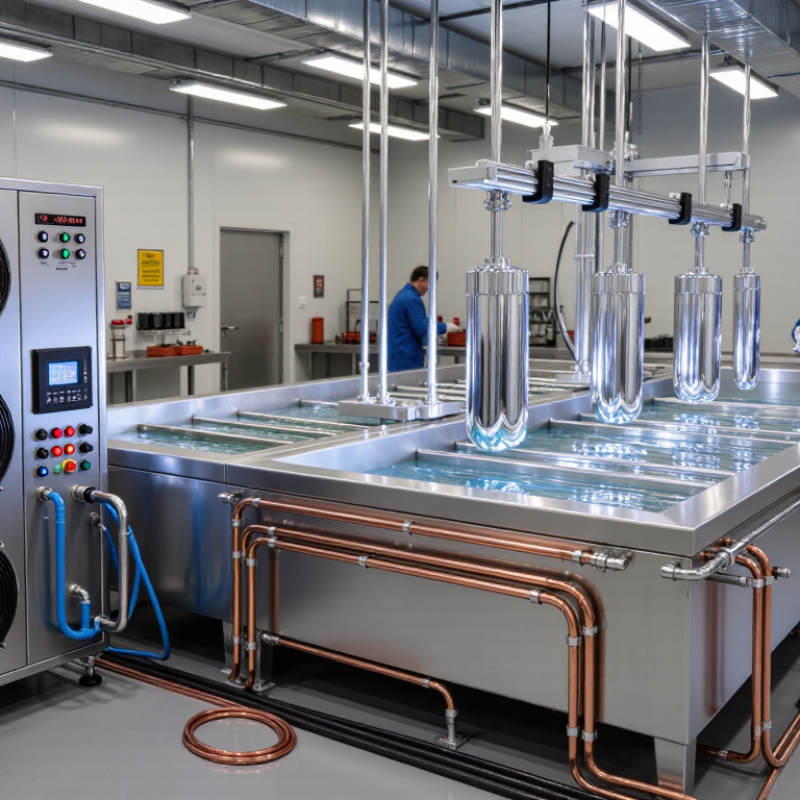
What Is a Phase-Lack Chrome Rectifier?
A phase-lack chrome rectifier is a DC power supply used for chromium electroplating. The term “phase-lack” usually refers to protection against a missing AC phase. In a three-phase system, the rectifier converts balanced alternating current into controlled direct current. If one phase disappears, the output can become unstable.
The problem is visible at the tank. Current may pulse, the workpiece can develop dull areas, and the coating may become uneven. The transformer and power components may also run hotter. That heat is not harmless. It can shorten insulation life and distort calibration. A simple phase monitor helps detect the fault before serious damage occurs.
When choosing a unit, match its current and voltage range to the plating load, not only to the largest workpiece. Check the rated duty cycle, cooling method, output ripple, and overload protection. Water-cooled systems need clean flow and reliable temperature monitoring. Air-cooled systems need space around their vents.
Measure the incoming three-phase voltage during operation. Measure it again when the rectifier carries its normal load. A stable reading at no load is not enough. This is where many selections go wrong. Also confirm that the controller regulates current smoothly at low settings. Chrome plating can react sharply to small current changes.
A practical design should include phase-loss alarms, short-circuit protection, and clear meter readings. Confirm grounding, enclosure protection, and installation requirements with a qualified electrical professional. Specifications can look convincing, yet the actual workshop environment may expose weaknesses. That deserves a second check.
Key Electrical Specifications for Chrome Plating
Choosing a phase lack chrome rectifier starts with its electrical specifications, not its cabinet size. A missing input phase can create unstable output, overheating, and uneven chrome deposition. Select a three-phase unit with a clearly stated input voltage and frequency range. Confirm the rated output current supports the tank’s maximum load continuously, not only for short peaks. Chrome plating usually needs low voltage and high current, so current capacity matters more than impressive voltage figures.
Check voltage regulation, current regulation, and ripple performance. Lower ripple generally supports a smoother deposit, especially on large or visually critical parts. Ask for measured ripple data at your actual operating current. A brochure value may reflect ideal testing. It is worth checking twice. The rectifier should also include phase-loss detection, overcurrent protection, short-circuit protection, and an emergency stop circuit. Digital meters should show real-time voltage and current, while external calibrated meters can verify their accuracy.
Cooling deserves equal attention. Airflow around the rectifier, ambient temperature, and continuous duty rating can change real performance. Water-cooled systems need reliable flow monitoring and clean connections. Inspect cable size, busbar capacity, and terminal temperature after a full production cycle. A loose connection may look harmless, but it can waste power and create heat. I would also compare efficiency and control response, although these figures are sometimes presented too optimistically. Leave operating headroom instead of selecting a unit at its absolute limit. That small decision can prevent unstable plating later.
How to Match Rectifier Capacity with Plating Requirements
How to Choose a Phase Lack Chrome Rectifier?
Matching rectifier capacity to plating requirements starts with surface area, not tank volume. Measure the total cathode area, including complex edges and recessed sections. Then multiply it by the required current density. For example, 2,000 square centimeters at 8 A/dm² requires about 160 amperes. Add practical headroom, usually 15–25%, for contact losses and load changes.
Voltage also matters. Chrome plating may need higher voltage than ordinary decorative plating. Estimate bath resistance, anode spacing, cable length, and connection losses before selecting the output range. A rectifier that reaches the target current but operates constantly at its limit may overheat. Choose stable regulation and phase-loss protection. Safety depends on it.
Check the duty cycle carefully. Continuous production needs stronger cooling than occasional work. Water cooling can suit heavy loads, while forced air may fit smaller systems. Use meters with clear current and voltage readings. During trials, record temperature, current stability, coating thickness, and surface appearance. Small fluctuations can create dull areas or uneven deposits.
I once underestimated cable losses. The displayed current looked correct, but the workpiece received less power. Recheck at the load. Leave room for process changes, but avoid buying excessive capacity without evidence. A qualified electrical technician should verify installation requirements and local safety standards.
Protection Features for Phase-Loss and Overload Conditions
How to Choose a Phase Lack Chrome Rectifier?
A chrome-plating rectifier must detect phase loss before unstable current damages production. The U.S. Department of Energy reports that motor-driven systems consume more than half of industrial electricity. This highlights the cost of neglected electrical protection. Choose a rectifier with a dedicated phase-monitoring relay, not only a basic fuse. It should identify missing phases, voltage imbalance, and abnormal frequency. A visible alarm helps operators react before the plating bath shows uneven color or rough deposits.
Overload protection is equally important. Select adjustable current limits, fast electronic shutdown, and thermal monitoring for the transformer, busbars, and power modules. IEC 60947-4-1 guidance emphasizes coordinated protection for overload and short-circuit conditions. In practice, the trip level should match the rectifier’s continuous rating, cable size, and cooling method. Oversizing the current setting is risky. It can hide a failing diode or blocked cooling fan.
Test the protection system under controlled conditions. Simulate phase loss and confirm that output current falls safely. Check whether the unit requires a manual reset after overload. Automatic restart sounds convenient, but it may surprise maintenance staff. I have seen settings copied from older equipment without checking actual bath demand. That is a weak habit. Record trip times, temperature readings, and load profiles during commissioning. Review them after several plating cycles. Small differences matter. Not every fault appears immediately.
Installation, Testing, and Maintenance Considerations
How to Choose a Phase Lack Chrome Rectifier?
A phase lack chrome rectifier needs careful selection before installation. Check the plating tank’s required voltage, current, duty cycle, and input phase. Confirm that the rectifier includes phase-loss protection and suitable overload control. A unit with excessive capacity may waste energy and respond poorly at low loads. An undersized unit may overheat during long production runs. Ask a qualified electrician to verify supply cables, grounding, ventilation, and disconnect devices. Keep the rectifier away from chemical mist and standing water. Small installation errors can create large maintenance problems.
Testing should begin before connecting the plating load. Inspect terminals, cooling fans, meters, and protective devices. Measure input voltage across every phase, then check output polarity and stability. Test the phase-loss alarm under controlled conditions, following the manufacturer’s service procedure. Never bypass a protective circuit for convenience. During operation, record voltage, current, temperature, and unusual noise. These records help identify loose connections or cooling failure early. In my experience, clean readings do not always prove perfect performance. Repeat tests after the system reaches operating temperature.
Tips: Keep air passages clear. Inspect cables monthly. Tighten connections only after isolation. Clean conductive dust carefully. Compare meter readings with a calibrated instrument twice yearly. If output fluctuates, stop and investigate. Guessing is expensive. A written maintenance log also improves traceability, although busy teams sometimes neglect it. That weakness deserves attention.