How to Choose the Best EV Charger Plug at the 2026 Canton Fair?
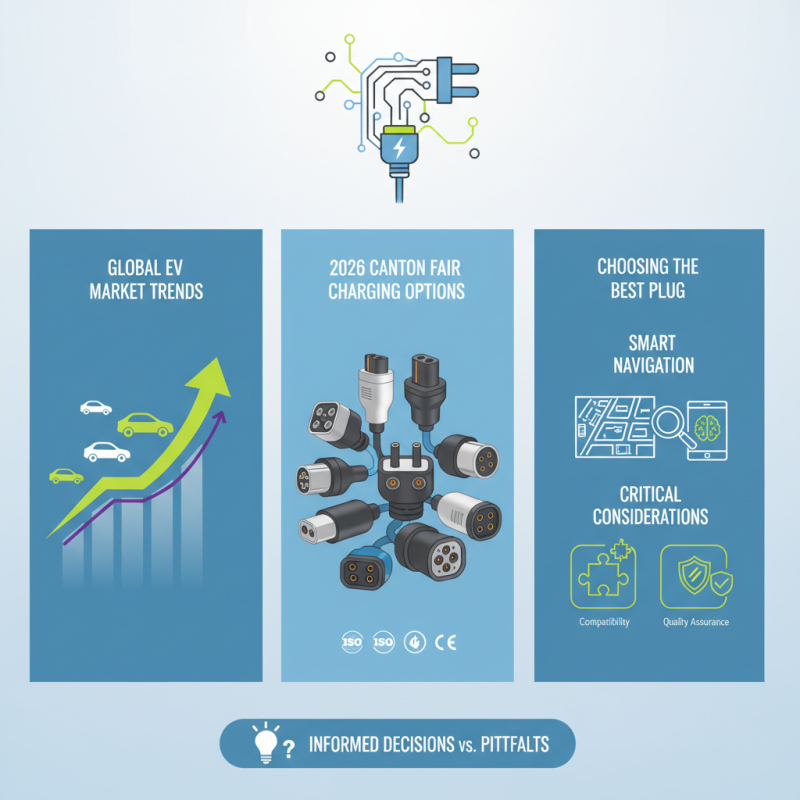
As the global market for electric vehicles (EVs) continues to expand, the demand for reliable EV Charger Plugs has also surged. According to a recent report by the International Energy Agency (IEA), over 10 million electric cars were sold worldwide in 2022, reflecting a growth rate of 55% from the previous year. This trend suggests that the selection of EV charger plugs has become crucial for both manufacturers and consumers.
At the 2026 Canton Fair, buyers will encounter a wide array of charger options. Many suppliers will showcase products that meet international standards such as ISO and CE certifications. Still, the challenge remains: how to choose the best EV charger plug among numerous options? Effective navigation and quick supplier identification are vital. The introduction of AI tools at the Fair can streamline this process significantly. Yet, even with advanced technology, buyers must approach their choices critically and avoid potential pitfalls in compatibility and quality assurance.
The market for EV charger plugs is evolving rapidly. With the right insights, you can make informed decisions. However, not every product will meet your expectations. Many variables may impact your choice, leading to dissatisfaction. Thus, careful consideration during your visit to the Canton Fair is essential.
Understanding the Different Types of EV Charger Plugs Available
Choosing the right EV charger plug can be challenging. Understanding the types available is crucial. In 2023, the global EV charging infrastructure market was valued at $30 billion. This figure is expected to reach $100 billion by 2027. Such rapid growth highlights the importance of selecting quality components.
There are mainly three types of EV charger plugs: Type 1, Type 2, and CCS. Type 1 is popular in North America, while Type 2 dominates Europe. CCS combines AC and DC charging, making it versatile. Each type serves different vehicle models. Identifying your vehicle's requirements is essential before making a decision.
Tip: Research and verify compatibility with your EV model. Not all plugs fit every car.
A common mistake is choosing based on convenience rather than performance. Plug specifications vary significantly. For example, some chargers only deliver 3.7 kW, while others exceed 350 kW. This difference impacts charging speed and efficiency.
Tip: Pay attention to the amperage. Higher amperage usually means faster charging.
It’s also wise to consider future needs. As EV technology evolves, so will charging standards. Make sure your choice accommodates potential upgrades. Prioritize flexibility in your selection process.
Key Factors to Consider When Selecting an EV Charger Plug
Choosing the right EV charger plug can be daunting. At the 2026 Canton Fair, various options are available. Make sure to consider compatibility with your vehicle. Different vehicles may require specific plug types. It’s essential to know what suits your needs best.
Tip: Research your EV model beforehand. Understand the required specifications for charging. Not all chargers will work with every electric vehicle.
Charging speed is another key factor. Different plugs offer varying power levels. Some chargers enable quicker charging, while others may be slower. When inspecting chargers, pay attention to their output.
Tip: Don’t rush the decision. Compare multiple options to gain insight. It’s easy to feel overwhelmed by choices. Identifying your primary charging needs is crucial for making an informed decision.
Electric Vehicle Charger Plug Selection Factors at the 2026 Canton Fair
Evaluating Compatibility with Your Electric Vehicle Model
When evaluating compatibility with your electric vehicle model at the 2026 Canton Fair, pay attention to the specific charger plug types. Different vehicles use various connector types. Knowing your vehicle’s requirements is crucial. You wouldn’t want to invest in a charger only to find it incompatible.
Research the charging standards frequently used in your region. Most EVs utilize either Type 1 or Type 2 connectors. The rules can differ between regions. Consider your driving patterns. A slower charger might be fine for overnight use. But a fast charger could be essential for frequent road trips.
Tips: Always read user reviews about the chargers you’re interested in. These experiences can highlight compatibility issues. Don’t hesitate to ask questions at the fair. Vendors often have valuable insights, but remember, they want to make a sale. A bit of skepticism helps in making better choices. Take your time to think through your options; rushing can lead to regrets later.
Analyzing Charging Speed and Power Ratings of EV Chargers
Choosing the right EV charger plug is crucial for maximizing efficiency. Charging speed and power ratings significantly impact vehicle performance. According to a 2022 industry report, faster chargers can deliver up to 150 kW. This allows for an 80% charge in about 30 minutes for most electric vehicles.
Power ratings vary widely. Basic Level 1 chargers often provide 1.4 kW, while Level 2 chargers can deliver from 3.3 kW to 22 kW. The latter is more suitable for home installation and public charging stations. A study in 2023 highlighted that users prefer chargers with higher kW ratings for quicker turnaround times. However, higher power doesn't always mean better performance. Compatibility with vehicle specifications is equally essential.
Analyze your specific charging needs. For instance, a daily commuter may find a Level 2 charger sufficient. Conversely, those needing rapid charges should invest in higher-rated options. The choice of plug type also matters. Factors like connector types and local regulations can complicate decisions. Reflect on these elements carefully before making a commitment.
Tips for Navigating the Canton Fair's EV Charger Exhibits
Navigating the EV charger exhibits at the 2026 Canton Fair requires strategic planning. The fair showcases advancements in electric vehicle technology. According to the Global EV Outlook 2023 report, charging infrastructure is crucial as EV adoption continues to grow worldwide.
Understand your charging needs. Different EV chargers offer various power levels. Fast chargers can deliver up to 350 kW. They reduce charging time significantly. Yet, not every charger supports every vehicle type. Compatibility issues may arise if you don’t research ahead. Engage with exhibitors to clarify specifications and adapt to evolving technology.
Take note of the exhibit layout. Exhibitors may cluster by technology type. Some may focus on residential options, while others highlight public charging solutions. Keep an eye out for innovative designs that address charging accessibility. Reported user experience data highlights the importance of ease of use. Test the chargers if possible. Compare different products based on functionality and user experience. Collect literature that summarizes the product specifications. Your visit can lead to valuable insights, optimizing your decision-making process.
How to Choose the Best EV Charger Plug at the 2026 Canton Fair?
| Charger Type | Power Output (kW) | Charging Time (hours) | Connector Type | Ideal for Vehicle Types |
| Level 1 Charger | 1.2 kW | 8-12 hours | Type A | Home Use, PHEVs |
| Level 2 Charger | 7.2 kW | 4-6 hours | Type J | Most EVs, Home/Workplace |
| DC Fast Charger | 50-350 kW | 0.5-1 hour | CCS, CHAdeMO | Long-Distance Travel, Commercial |
| Home Charger | 3-7 kW | 3-8 hours | Type B | SUVs, Sedans |