How to Choose the Best Portable EV Charger at Canton Fair 2026?
As the 2026 Canton Fair approaches, the focus on Portable EV Chargers is becoming increasingly significant. The fair offers a unique opportunity to explore cutting-edge technology in the electric vehicle market. With the rising demand for sustainable transportation, having a reliable and versatile charging solution is crucial for many consumers and businesses alike.
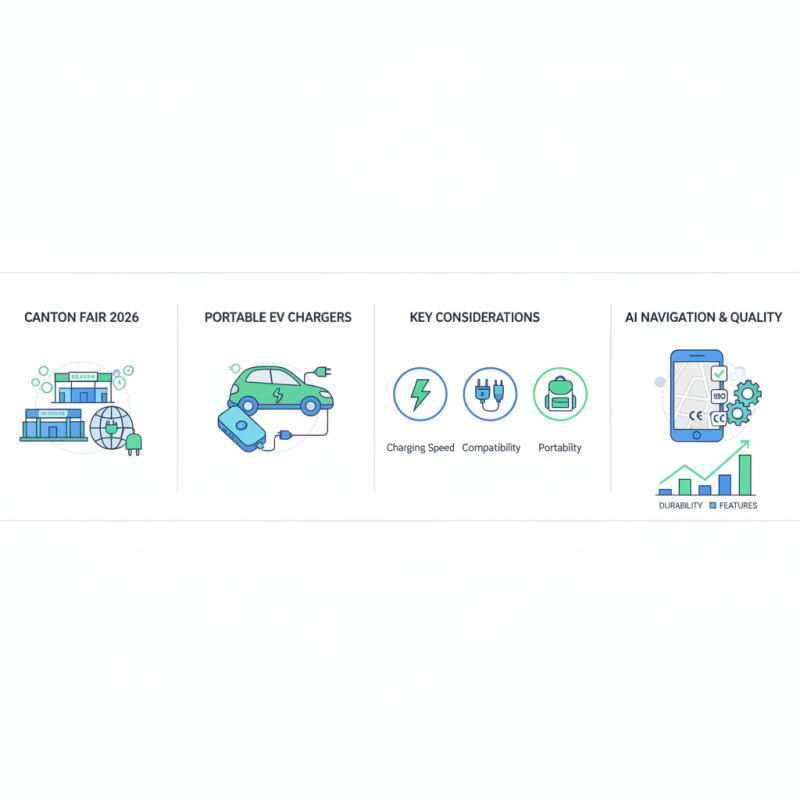
Navigating the vast exhibition space of 1.55 million square meters can be overwhelming. However, new AI-driven navigation tools will help visitors pinpoint suppliers that meet specific criteria, such as ISO or CE certifications. This feature enhances the selection process for Portable EV Chargers, ensuring attendees make informed choices.
While there are many options available, not every Portable EV Charger is created equal. Some models may lack essential features or durability. Therefore, a careful evaluation of the offerings at the fair is vital. Consider factors like charging speed, compatibility, and portability. Doing so can lead to better investments and satisfaction in your purchase choices.
Understanding Portable EV Chargers: Types and Features
When selecting a portable EV charger, understanding the types and features is crucial. Portable EV chargers generally fall into three categories: Level 1, Level 2, and DC fast chargers. Level 1 chargers use a standard 120-volt outlet. They are handy for overnight charging but are slow. Reports suggest they can take up to 20 hours to charge a vehicle fully. Level 2 chargers operate on 240 volts, almost halving the charging time. They suit users who need quicker access to power.
DC fast chargers are the most powerful. They can recharge your EV significantly in under an hour. However, their portability might be limited. Data shows that fast chargers account for about 10% of chargers in use today. Their installation cost can be high, making them less accessible for personal use.
Tip: Consider your charging habits. If you frequently travel long distances, a Level 2 or DC fast charger is advisable. If you charge overnight at home, a Level 1 charger might suffice. Also, check the compatibility of the charger with your specific EV model. Not every charger works with all vehicles. More research can help avoid purchasing a lesser-suited charger.
Key Considerations When Selecting a Portable EV Charger
Choosing the right portable EV charger at Canton Fair 2026 requires careful consideration. Look at the charging speed. A charger with higher output will save you time. Think about where you will use it most. Are you traveling or at home? This choice affects your options.
Consider compatibility with your vehicle. Not all chargers fit every model. Checking specifications can prevent frustration. Also, evaluate the build quality. A sturdy charger lasts longer, especially during travel. Lightweight options are great but should not compromise strength.
Tips: Assess the length of the charging cable. If it's too short, it may limit your charging locations. Also, remember to check user reviews. They often provide insights on real-world performance. Finally, think about extra features. Some chargers offer smart functionalities. These can enhance your charging experience.
Evaluating Charging Speed and Compatibility Options
When choosing a portable EV charger at Canton Fair 2026, evaluating charging speed is crucial. The power output varies significantly among chargers. Many portable units offer between 3.7 kW to 22 kW, affecting how quickly your vehicle can charge. Rapid chargers can provide up to 80% charge in less than an hour, drastically reducing downtime during travel.
Compatibility options also play a vital role. Various electric vehicles use different charging standards. About 60% of EVs worldwide support CCS and Type 2 connectors, while Tesla vehicles often require adapters. A versatile charger can save you hassle and time on the road. Reports indicate that 45% of EV owners experience compatibility issues, which can lead to frustration.
Consumers should reflect on their actual charging needs. Analyze the average distance driven daily. A high-power charger may be unnecessary if you primarily charge at home. Optimal charging solutions depend on your travel patterns and infrastructure access. Be cautious not to overlook these factors while choosing your charger.
Comparing Brands and Models at the Canton Fair 2026
As the demand for electric vehicles (EVs) continues to rise, the need for efficient portable EV chargers becomes critical. At the Canton Fair 2026, visitors will find a diverse array of brands and models. Understanding how to compare these options is essential for making an informed decision.
Recent industry reports indicate that the global market for portable EV chargers is expected to grow at a compound annual growth rate (CAGR) of 30% by 2027. Factors influencing this pace include the increasing number of EVs on the road and the urgency for convenient charging solutions. Portable chargers tend to vary significantly in terms of charging speed, portability, and durability. Some models can charge an EV in as little as 2-4 hours, while others may take longer.
When evaluating products at the fair, pay attention to user reviews. Many first-time users report challenges with compatibility and ease of use. Some chargers may not work seamlessly with all EV models. This inconsistency can lead to frustration. Additionally, consider the weight and size of the charger, as portability is key for many users. Not every charger is built for travel, and this can limit usage. The right choice should balance efficiency, versatility, and user-friendliness.
How to Choose the Best Portable EV Charger at Canton Fair 2026?
| Model | Charging Speed (kW) | Battery Compatibility | Weight (kg) | Price (USD) | Warranty (Years) |
| Model A | 7.2 | Nissan Leaf | 1.5 | 350 | 2 |
| Model B | 11 | Tesla Model 3 | 1.8 | 450 | 3 |
| Model C | 22 | BMW i3 | 2.0 | 699 | 5 |
| Model D | 3.7 | Ford Mustang Mach-E | 1.3 | 299 | 2 |
| Model E | 16.5 | Porsche Taycan | 2.5 | 799 | 4 |
Tips for Negotiating Prices and Securing the Best Deals
Negotiating prices at trade shows like the Canton Fair can be tricky. According to industry reports, roughly 70% of buyers fail to leverage their negotiating power effectively. Knowing the right strategies can mean significant savings. Start by researching market prices to establish a baseline. This helps you recognize when a deal is truly good.
When engaging with suppliers, use open-ended questions. This invites them to share more about their products and pricing strategies. Phrasing like “What discounts can you offer for bulk orders?” opens the door for negotiation. Be prepared to encounter high initial prices; sellers often expect you to haggle.
Pay attention to the details. Look for variations in product specifications that justify price differences. An understanding of these nuances can strengthen your position. Reports suggest that a lack of such knowledge can lead to missing out on better deals. Additionally, building rapport can work wonders. A friendly demeanor can sometimes yield unexpected concessions.
Portable EV Charger Features Comparison