China Top Temperature Sensor Manufacturers for Global Buyers
Temperature Sensors are essential in industrial automation, medical equipment, automotive systems, and building controls. Their performance affects product safety, energy use, and process stability. MarketsandMarkets estimated the global temperature sensor market at US$6.3 billion in 2023 and projected US$8.4 billion by 2028, citing expanding demand across industries. This is a forecast, not a guarantee. Still, it shows why buyers are looking beyond price.
China has a broad supplier base, from component makers to manufacturers offering probes, transmitters, and custom assemblies. That range can help buyers match sensor type to the application. A platinum RTD may suit stable process measurement, while a thermocouple can handle a wider operating range. Details matter. Probe length, sheath material, response time, tolerance, and calibration documentation can affect performance after installation. A polished catalogue is not proof of consistent production.
This guide introduces China’s leading temperature sensor manufacturers for global buyers and explains what to check before requesting a quotation. Ask for test records, traceability, sample evaluation, and clear communication about tolerances. For platinum resistance thermometers, IEC 60751 provides a useful reference for resistance-temperature characteristics; buyers should confirm the exact product and test method. Supplier rankings can simplify research, but they cannot replace technical review. I would not choose on claimed accuracy alone. Factory capability and after-sales support deserve equal scrutiny. Sometimes the smallest specification on a datasheet causes the biggest delay.
Structure of China’s Temperature Sensor Manufacturing Industry
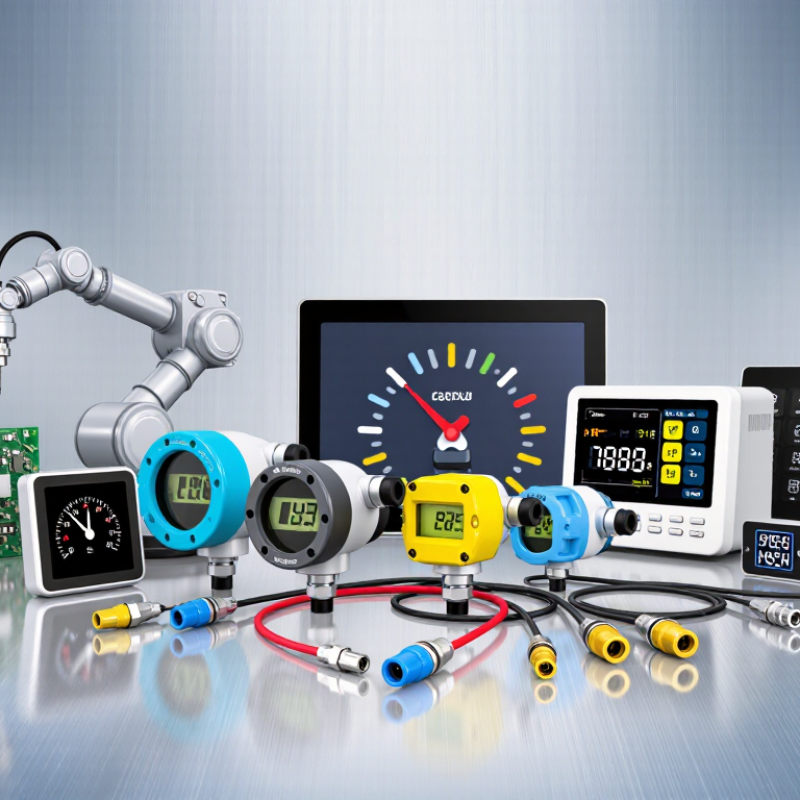
China’s temperature-sensor industry is a layered supply chain, not a single factory category. Upstream suppliers provide ceramic substrates, thermistor materials, platinum wire, semiconductor dies, and protective metal sheaths. Sensor-element makers turn these inputs into thermistors, resistance temperature detectors, and thermocouples. Downstream manufacturers add probes, cables, transmitters, and control interfaces for industrial, automotive, appliance, and building applications.
The China Sensor and IoT Industry Alliance estimated China’s overall sensor market at about RMB 332.4 billion in 2023. This figure covers many sensor types, not temperature sensors alone, so it should not be read as a temperature-market value.
Production is concentrated in manufacturing regions with established electronics and precision-processing supply chains. A buyer may find one supplier specializing in sensing elements and another handling probe assembly, calibration, and custom housings. Ask how the supplier verifies accuracy across the stated temperature range, and whether calibration records are traceable. The boundary is messy, though. Some firms combine design, fabrication, and testing, while others depend on outside partners for critical components. That variation can affect lead times and consistency between batches.
Main Temperature Sensor Types and Their Operating Principles
Temperature sensors convert heat into an electrical signal or a measurable radiation pattern. Thermocouples join two different metals; their junction voltage changes with temperature through the Seebeck effect. NIST Monograph 175 provides reference functions for common thermocouple types on the ITS-90 temperature scale. They respond quickly and tolerate harsh environments, but the reading depends on reference-junction compensation. Small wiring errors can matter.
Resistance temperature detectors use a metal element whose resistance rises predictably as temperature increases. IEC 60751:2022 specifies platinum sensors, including the widely used Pt100: 100 ohms at 0°C, with a nominal temperature coefficient of 0.003851 per degree Celsius. Its Class A tolerance is ±(0.15 + 0.002|t|)°C. Thermistors also change resistance, often sharply, making them sensitive over narrower ranges. That matters. Their nonlinear response requires suitable calibration and signal conversion.
Infrared sensors estimate surface temperature from emitted radiation, without touching the object. ASTM E1933 addresses emissivity measurement and compensation for infrared imaging radiometers; emissivity errors can skew readings, especially on shiny metal. A warm pipe, moving conveyor, or distant hot surface may suit infrared measurement, while a probe can better represent internal or contact temperature. Installation still complicates things. Sensor choice should account for range, response time, accuracy, mounting, and calibration—not just the headline specification.
Main Temperature Sensor Types and Typical Operating Ranges
Representative temperature ranges (°C) for common sensor types. Actual limits depend on sensor materials, construction, and operating conditions.
How they work: Thermocouples generate a voltage from the temperature difference between two dissimilar metals. RTDs measure the temperature-dependent resistance of a metal element, commonly platinum. NTC thermistors use a semiconductor whose resistance decreases as temperature rises. Semiconductor temperature sensors derive temperature from changes in a chip’s electrical characteristics.
Ranges shown are indicative examples, not guaranteed limits for every sensor or assembly.
Leading Chinese Manufacturers and Their Product Specialties
Chinese temperature-sensor manufacturers serve industrial, building, food-processing, and laboratory buyers, but their strengths differ. Some focus on high-volume thermistors, while others build probes for demanding process conditions. A useful comparison starts with the measurement range, response time, and installation environment—not a catalog headline. Small details matter.
Many manufacturers specialize in platinum resistance temperature detectors, valued for stable readings across controlled processes. Thermocouple producers often offer broad temperature ranges and rugged assemblies for furnaces, kilns, and equipment lines. For compact electronics, NTC thermistors provide quick response in battery packs and appliances. Some suppliers also produce infrared sensors, cable probes, and transmitters with standard industrial outputs. Product quality can vary between models, even within one catalog.
For global procurement, request the exact sensor element, sheath material, tolerance class, calibration method, and wiring diagram. Ask for test records tied to the quoted model, not just a general quality certificate. Check whether the supplier can provide consistent samples and explain changes in materials or production. I would not assume a custom probe is ready for field use after one bench test; vibration, moisture, and cable routing can expose weaknesses. Clear technical answers are a useful sign of manufacturing experience.
Industry Standards, Quality Controls, and Export Capabilities
Global buyers should assess temperature sensor manufacturers by evidence, not catalog claims. Check whether production follows documented controls aligned with ISO 9001:2015, including material checks, process records, and corrective actions. For platinum resistance sensors, IEC 60751:2022 gives Class A tolerance as ±(0.15 + 0.002|t|)°C. At 100°C, that equals ±0.35°C. Ask suppliers to state the sensor class, calibration range, and measurement uncertainty clearly. Small details matter.
Reliable quality checks include inspecting incoming wire and probes, testing insulation, and calibrating finished sensors at several points across their working range. Request sample certificates showing traceability to national or international measurement standards, plus batch-level records. A certificate alone is not enough if its range does not match your application. Export capability also means practical readiness: protective packaging, clear product labels, consistent lead-time estimates, and accurate shipping documents. These details reduce delays and help preserve sensor performance in transit.
Tips: Request a sample calibration certificate and confirm its uncertainty, test range, and traceability. Ask how the supplier handles out-of-tolerance results. Then verify that the stated export lead time includes inspection and packing.
How Global Buyers Assess Chinese Temperature Sensor Suppliers
Global buyers should assess Chinese temperature sensor suppliers through evidence, not polished catalogs. Request calibration records that identify the test points, reference equipment, measurement uncertainty, and date. Small details matter. A sensor rated for a wide temperature range may still perform poorly near the specific operating point your process requires.
Compare response time, repeatability, drift, probe materials, and connection options against your actual installation conditions. Ask for sample units and test them in the same environment where they will be used.
Check whether readings remain stable after repeated heating and cooling cycles. Ask for evidence. Clear answers to technical questions often reveal more than a low quotation does.
Production consistency deserves equal attention. Discuss how incoming materials, in-process checks, and final inspections are recorded, and ask how defects are handled.
Confirm lead times, sample approval steps, packaging, and communication arrangements before placing a larger order. A remote factory review can help, but it cannot prove every claim. Some buyers overvalue a neat audit file; real performance still needs verification. Keep written specifications and agreed acceptance criteria, even when conversations feel straightforward.