
What Is a Ceramic Vacuum Filter and How Does It Work?

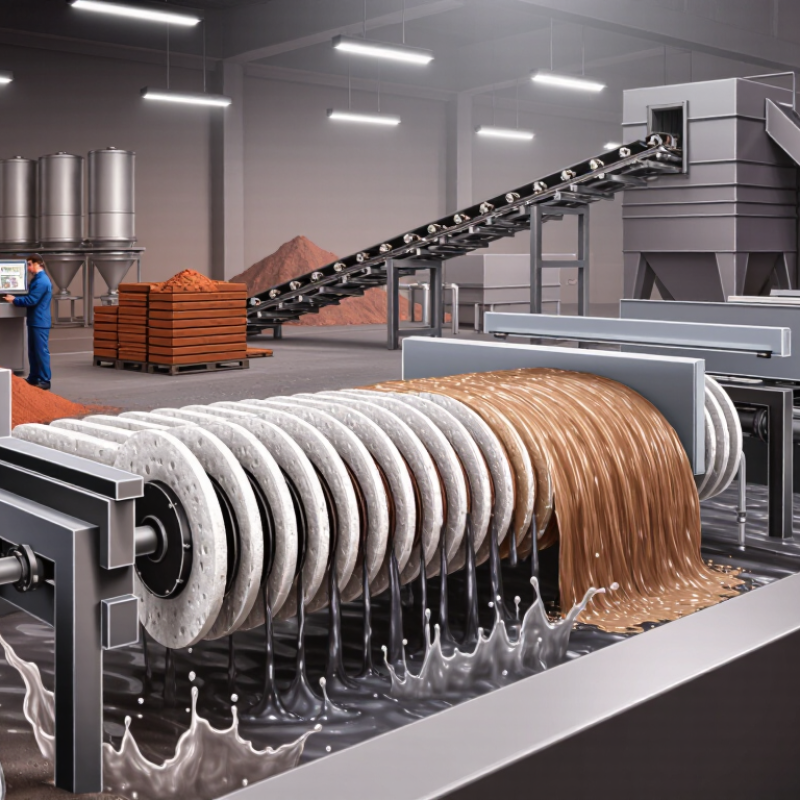
A Ceramic Vacuum Filter removes water from mineral slurry by combining vacuum pressure with porous ceramic discs. The discs rotate through a feed tank. Their tiny pores hold liquid by capillary action, while solids collect on the surface. A scraper then removes the cake. The cycle repeats.

The scale of mineral processing makes efficient dewatering important. The U.S. Geological Survey’s Mineral Commodity Summaries 2024 estimated global copper mine production at 22 million metric tons in 2023. That figure does not measure filter use, but it shows the scale of material flows that processing plants must handle. In practice, feed size, slurry chemistry, and operating conditions affect filter performance. A clean-looking cake is not the whole story.

Mineral-processing author Barry A. Wills’s published work offers a useful principle: dewatering should be assessed within the complete process flowsheet, not by one machine alone. This wording is a paraphrase, not a verified verbatim quotation. That distinction matters. A ceramic filter can reduce moisture and support water recovery, yet it may not suit every feed or plant layout. Operators still need to test their own slurry and monitor pore condition, cake release, and vacuum stability. The details matter. This guide explains the equipment, its working cycle, and the practical factors behind its performance. It also leaves room for a less tidy reality: laboratory results do not always predict daily plant operation.
What Is a Ceramic Vacuum Filter and How Does It Work?

Definition and Core Purpose of a Ceramic Vacuum Filter

A ceramic vacuum filter separates liquid from fine solids in a slurry. Its main purpose is dewatering: producing a manageable solids cake while recovering filtrate for possible reuse. A rotating drum or disc carries porous ceramic elements through the slurry. Vacuum draws liquid through tiny pores, while particles collect on the surface. The cake is then removed mechanically. Simple in principle.

In mineral processing, this step can reduce water carried into storage or later processing. The USGS Mineral Commodity Summaries 2024 estimated global copper mine production at 22 million metric tons in 2023, illustrating the scale of material handled across the sector. That figure is not a filter-performance measure; actual results depend on ore, particle size, and operating conditions. Operators monitor cake moisture, filtrate clarity, and pressure changes to judge performance. Ceramic elements can support water recovery, but they are not maintenance-free. Pore blockage, uneven feed, or a poorly adjusted vacuum may reduce throughput. Small details matter. A dry-looking cake can still retain significant moisture, so measurements—not appearance alone—should guide process decisions.

Ceramic Vacuum Filter: Core Purpose and Operating Cycle

A ceramic vacuum filter uses vacuum to draw liquid through a porous ceramic medium while suspended solids collect on its surface. In a typical cycle, the solids form a cake, the cake is dewatered, and the cake is removed.

The equal bars mark the three stages in sequence; their height does not represent measured performance or duration.

Main Components and Their Functions

A ceramic vacuum filter separates liquid from fine solids using porous ceramic discs, a vacuum system, and controlled cake removal. The discs rotate through slurry, where their tiny pores retain particles while water passes through. Capillary action helps draw filtrate through the ceramic, so the vacuum mainly removes free liquid. Small pores matter.

The vacuum pump, piping, and filtrate receiver maintain suction and carry separated water away. As each disc leaves the slurry, a thin cake remains on its surface. A scraper removes it into a discharge chute, while a spray or backwash system clears pores before the disc re-enters the tank. The USGS Mineral Commodity Summaries 2025 estimates global iron ore mine output at about 2.5 billion metric tons in 2024, illustrating the scale of mineral processing where reliable dewatering equipment matters. Still, clear filtrate alone does not prove the filter is performing well: cake moisture, throughput, and pore condition also need monitoring. A partly clogged disc can quietly reduce capacity. The right operating settings depend on the slurry, and that variability is easy to underestimate.

What Is a Ceramic Vacuum Filter and How Does It Work? - Main Components and Their Functions

Component Main Function How It Works Key Detail
Ceramic filter discs or plates Separate liquid from suspended solids. The porous ceramic surface retains solid particles while filtrate passes through its pores under vacuum. Porosity and pore size are selected for the material being processed; ceramic elements are designed for repeated cleaning and use.
Rotating filter assembly Continuously brings the filter surface through the slurry and successive operating zones. As the assembly rotates, each filtering surface is immersed in slurry, exposed to vacuum, and then moved to cake removal and cleaning zones. Rotation supports continuous filtration rather than requiring a separate batch for every cycle.
Slurry tank and agitator Hold the feed and keep solids distributed in the liquid. The filter surface enters the agitated slurry, where vacuum draws liquid through the ceramic medium and solids collect on its outer surface. Agitation helps limit settling and maintain a more consistent feed around the filter.
Vacuum system Provide the pressure difference that drives filtration. A vacuum pump or equivalent vacuum source draws filtrate through the porous ceramic elements and into the filtrate circuit. Operating vacuum is set according to the equipment design and process requirements.
Filtrate channels and receiver Collect and convey the liquid removed from the slurry. Liquid passing through the ceramic elements travels through internal passages and piping to a receiver or downstream process. The collected liquid is called filtrate; its quality depends on the feed, filter medium, and operating conditions.
Filter cake Capture the solids separated from the slurry. Solids accumulate on the ceramic surface as liquid is drawn through it. Continued drainage reduces liquid held in the cake. Cake thickness and moisture depend on the material and filtration conditions.
Cake discharge system Remove the dewatered solids from the filter surface. A scraper or other discharge arrangement releases the cake after the filtering surface leaves the slurry and completes its drainage stage. The discharge method is designed to remove cake without damaging the ceramic elements.
Cleaning and backwashing system Clear pores and help restore filtration performance. Cleaning liquid or a reverse flow may be applied to remove fine particles lodged in the ceramic pores. Cleaning frequency and method depend on the feed and the filter design.
Drive and control system Control rotation and coordinate operating conditions. The drive turns the filter assembly, while controls monitor or adjust operating variables such as speed and vacuum. Consistent operation helps maintain stable filtration and cake discharge.

Operating sequence: The ceramic surface enters the slurry, vacuum draws liquid through the porous medium, solids form a cake on the surface, the cake drains and is discharged, and the filter surface is cleaned before repeating the cycle.

How the Filtration Cycle Works

A ceramic vacuum filter separates liquid from fine solids through porous ceramic discs. During operation, the discs rotate partly submerged in a slurry tank. Vacuum inside each disc pulls liquid through tiny pores, while solid particles collect on the outer surface. The filtered liquid travels through internal channels to a receiver. It is a steady process, but the slurry’s thickness can change how quickly filtration happens.

As a disc turns out of the slurry, vacuum continues to draw out moisture. This forms a damp layer, or filter cake, on the ceramic surface. Near the discharge point, a scraper removes the cake into a collection chute. The exposed disc then passes through a cleaning zone, where backwashing or another rinse clears pores before the next cycle. Then it starts again. Small changes in vacuum, rotation speed, or feed consistency can affect cake moisture and throughput, so settings often need adjustment. The cycle is efficient, though not perfectly uniform across every disc.

Tips: Check the cake’s texture and the filtrate’s clarity during operation. A sudden change may signal clogged pores or a shift in slurry conditions. Follow the equipment maker’s cleaning guidance; aggressive cleaning can damage ceramic surfaces.

Factors That Affect Filtration Performance

Filtration performance depends on the slurry, the ceramic medium, and operating conditions. In a ceramic vacuum filter, vacuum pulls liquid through fine pores while solids collect on the surface. The pore structure must suit the feed: pores that are too large may let fine particles pass, while very fine pores can slow drainage. Particle size matters. So does its range.

A thick, concentrated slurry may form a dense cake that resists flow. Fine particles can seal the cake surface, reducing filtrate output even when the vacuum level stays steady. Higher liquid viscosity also slows drainage; temperature can change viscosity, but heating is not always practical. Feed chemistry deserves attention, too. Some slurries leave mineral scale or sticky deposits that gradually block pores. Cleaning may restore flow, though aggressive methods can damage the medium.

Operating settings influence results. Vacuum pressure, filter rotation speed, cake thickness, and washing time affect moisture and throughput. More vacuum is not automatically better: a compacted cake may become harder to drain. Inspect filtrate clarity and cake texture, not just production rate. A cracked disc or uneven cake can be easy to miss. In practice, settings rarely stay perfect as feed conditions shift. A short trial with representative slurry often reveals more than assumptions do.

Common Applications and Practical Limitations

Ceramic vacuum filters are often used in mineral processing, where they separate water from fine concentrates after flotation or grinding. A rotating ceramic disc passes through a slurry, while vacuum draws liquid through tiny pores. The solids remain on the disc surface and form a cake that can be scraped off. The filtrate may look clear, but its quality still needs checking before reuse.

They can suit plants that need steady throughput and relatively dry cake, especially when processing fine particles. Energy use may be lower than with some conventional vacuum filters, though actual results depend on the slurry and operating settings. Small changes matter. A thicker slurry, sticky clay, or fluctuating particle size can slow filtration or block pores. Cleaning systems help, but they add operating steps and require monitoring. Ceramic elements can also cost more upfront than filter cloths, and damaged sections may be less convenient to replace. There is a practical catch: a filter that performs well with one concentrate may struggle with another. Pilot testing with representative feed is often more useful than relying on a supplier’s headline capacity.

Go to Top