
Best Organic Vegan Gelatin Alternatives in 2026
Choosing an “organic” label does not automatically make a gelling ingredient vegan. This guide explores Organic Gelatin Vegan alternatives for cooks seeking plant-derived options, clear sourcing, and dependable results. Agar can set firmly in fruit jellies; pectin often suits jams; konjac may create a springier texture. Each behaves differently. A spoonful test helps.
Food scientist Richard W. Hartel’s published work on confectionery gels offers a useful lens. An editorial paraphrase of that principle is: “Choose a gelling agent for its performance, not just its label.” This is not a verbatim quotation. For home cooks, performance means more than firmness: consider flavor, acidity, heating time, and whether the dessert must hold its shape at room temperature. Small details matter. A tart lemon filling may need a different approach than a soft berry topping.
The sections ahead compare popular alternatives, their textures, and practical uses. They also point out what labels may leave unclear, including organic certification and ingredient sourcing. Check the package, then test the recipe. Results can vary by brand, and even experienced cooks sometimes get a wobbly batch. That is worth admitting. A clear guide should help readers choose thoughtfully, not promise that every substitute behaves exactly like gelatin.
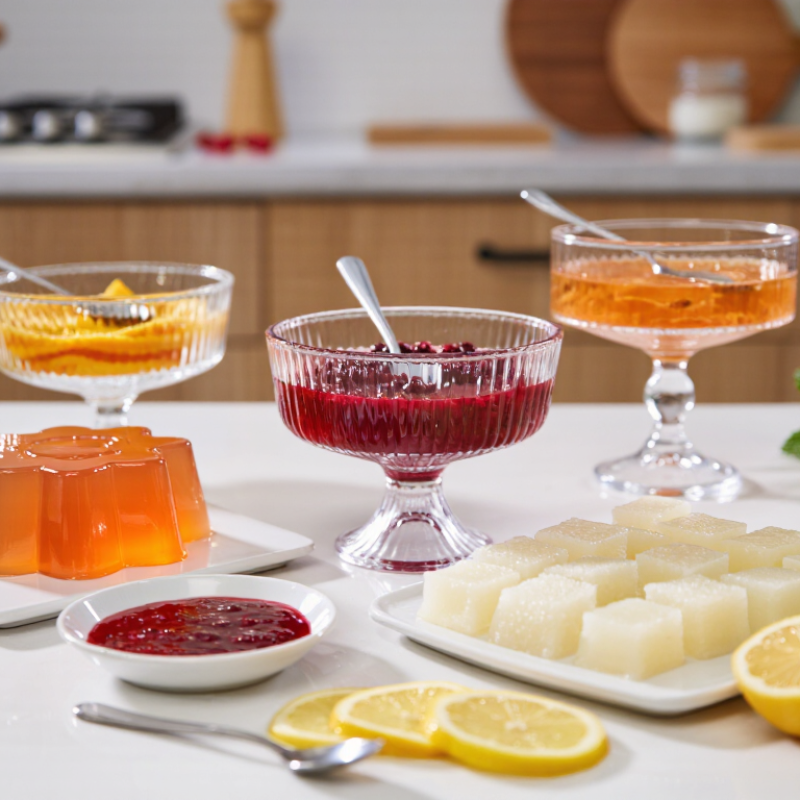
Define Organic Vegan Alternatives: USDA Organic Foods Need 95% Organic Ingredients
Best Organic Vegan Gelatin Alternatives in 2026
Vegan alternatives such as agar, pectin, and konjac can set desserts without animal-derived gelatin. But “vegan” and “organic” describe different things. Vegan refers to ingredients’ animal origins; organic refers to how qualifying ingredients are produced and handled. Under the USDA organic standard, a product labeled “organic” generally needs at least 95% organically produced ingredients, excluding water and salt. The remaining ingredients must meet applicable requirements. A plant-based setting agent is not automatically organic. Check the product label and certification details.
Tips: Compare the ingredient list, not just the front label. Look for the organic percentage or certification seal, then check whether the setting agent itself is organic. Agar can set firmly, while pectin often depends on sugar and acidity. Results vary by recipe, so test a small batch before preparing a large dessert.
Texture matters, too. A chilled fruit tart may need a softer set than a molded jelly. Follow the package’s directions, since these ingredients do not behave exactly like gelatin. Even careful label reading has limits: a finished food may contain both organic and nonorganic ingredients. That distinction can be easy to miss, especially when the word “vegan” gets the most attention.
Assess Agar: Food Science Sources Report Setting at 32–40°C and Melting at 85–95°C
Agar is a plant-derived gelling alternative often considered for vegan desserts. Food science sources commonly report that agar gels set around 32–40°C and melt around 85–95°C. These are useful ranges, not guarantees: concentration, acidity, sugar, and other ingredients can change the result. That matters.
Agar usually needs heating close to a boil to hydrate fully. Stir it into liquid, bring the mixture to a simmer, and keep stirring until the powder dissolves. Then pour promptly into small cups or a shallow dish. It can begin setting as it cools, so there may be less time for adjustments than with gelatin. A useful test.
The higher melting range helps agar desserts hold their shape in a warm room, while the set may feel firmer and more brittle than gelatin’s. I would test a small batch before making a layered tart; an overly firm filling can cut cleanly but feel less delicate. That trade-off is easy to overlook. For reliable results, measure the agar carefully and note the liquid amount, heating time, and final texture. Organic sourcing may matter to shoppers, but it does not remove the need to check product specifications or test the recipe.
Compare Pectin: The 50% Esterification Threshold Separates High- and Low-Methoxyl Types
For organic vegan gels, pectin offers a plant-derived alternative to animal gelatin, but its esterification level changes how it sets. The International Pectin Producers Association classifies pectin above 50% degree of esterification as high-methoxyl, and below 50% as low-methoxyl. The boundary matters. Check the supplier’s specification rather than relying on the word “pectin” alone.
High-methoxyl pectin generally needs acidic conditions and substantial soluble solids, often supplied by sugar. Low-methoxyl pectin can set with calcium, making it useful for lower-sugar recipes. FAO/WHO JECFA’s specifications identify pectin as a food additive with gelling and stabilizing functions; they also offer a useful reference for ingredient identity and quality. In a kitchen test, the difference shows up quickly: one mixture may set into a firm fruit gel, while another stays soft unless acidity, sugar, or calcium is adjusted.
Small details matter. Organic certification depends on the ingredient’s sourcing and certification, not simply its plant origin. Fruit acidity and mineral content also vary, so a formula may not behave identically every time. A reliable batch test should record pectin type, fruit, pH, sugar level, and setting time. Even a careful formula can disappoint when the fruit changes.
Review Carrageenan and Konjac: EU Food-Additive Codes E407 and E425
Best Organic Vegan Gelatin Alternatives in 2026
Carrageenan and konjac offer plant-based ways to create gels, but neither behaves exactly like animal gelatin. Carrageenan comes from red seaweed and appears in EU ingredient lists as E407. Its texture depends on the carrageenan type and the other ingredients. Some forms set firmly; others make a softer, creamy gel. Konjac, made from the konjac root, is listed as E425. It thickens strongly and can form a springy gel, especially when prepared under suitable conditions. E-numbers identify additives; they are not organic certifications or quality ratings.
Tips: Match the ingredient to the dish. Try carrageenan in a chilled dessert, or a small amount of konjac in a firm jelly. Measure carefully—too much can turn a smooth spoonful rubbery. Test a small batch first. Results vary with acidity, minerals, temperature, and the specific product. I’ve found that a recipe can look promising in the bowl and still set too stiffly overnight.
For organic cooking, check the finished product’s certification and ingredient rules rather than assuming a seaweed or root additive is automatically permitted. EU rules can limit which additives are allowed in particular food categories, so verify current requirements for your use. Neither option is a one-for-one gelatin swap; a little trial and error is normal.
Match the Alternative to the Recipe: Compare Acidity, Calcium, Gel Strength, and Heat
Choosing an organic vegan gelling agent starts with the recipe’s chemistry, not a one-for-one swap. High-methoxyl pectin typically needs a pH around 2.8–3.5 and roughly 55–75% soluble solids to set, according to technical guidance from the International Pectin Producers’ Association. That suits tart, sweet preserves better than a lightly sweetened fruit cream. Too little sugar? The gel may stay loose. Low-methoxyl pectin relies more on calcium, making it useful for lower-sugar mixtures, though excess calcium can create a tight, brittle texture.
Agar behaves differently. FAO’s technical reference on agar describes its strong heat resistance: it generally sets as it cools and melts at temperatures far above refrigerator temperature. For a clear citrus jelly, dissolve agar fully with heat, then add acidic juice near the end; prolonged boiling in acid can weaken the set. Agar can feel firm and clean-cut, but not supple like gelatin. Not interchangeable.
Match the texture to the spoon. Calcium-rich plant milk may help low-methoxyl pectin, while an agar-based custard can turn too rigid if the dose is guessed. A small test batch is more reliable than copying a gelatin measurement. I would also check the finished acidity and sweetness, not just the ingredient list; fruit varies, sometimes noticeably. These ranges are useful starting points, not guarantees, because solids, minerals, and cooking time all shift the result.