
Best Marine Induction Cooker for Boats in 2026
A Marine Induction Cooker can make life aboard more comfortable, but the right choice depends on more than cooking speed. A compact unit may fit neatly into a galley, yet still draw more power than a boat’s electrical system can comfortably supply. Before comparing models, consider inverter capacity, battery condition, available counter space, ventilation, and the cookware you already own.
No verified expert name or quotation was supplied, so I won’t invent an attribution. A useful principle for this guide is simple: match the cooker to the boat’s real power capacity, not its advertised convenience. That matters when a kettle, refrigerator, or other appliance is running at the same time. A pan that heats quickly on shore power may behave differently when the boat relies on batteries.
This 2026 guide will compare practical features, installation needs, safety considerations, and everyday cooking performance. It will also look at compromises, because no cooker suits every galley. Some buyers may prefer a lighter portable model; others may value steadier controls and a more secure fit. The best choice is the one that works reliably in your actual setup, including during a quiet evening at anchor. Before buying, check the manufacturer’s electrical requirements and confirm they match your boat’s system. That small check can prevent an expensive mismatch.
What Makes an Induction Cooker Suitable for Marine Use?
Best Marine Induction Cooker for Boats in 2026
What Makes an Induction Cooker Suitable for Marine Use?
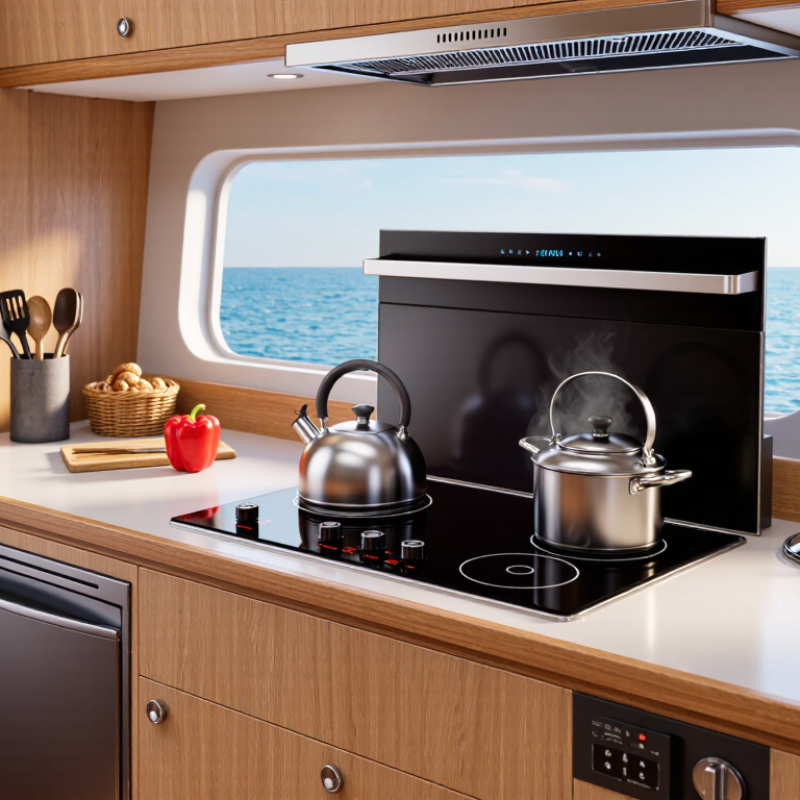
A marine-suitable induction cooker must handle limited space, movement, and carefully managed electrical power. Check that the unit can be securely installed or restrained, so it will not slide when the boat rocks. Its power draw should match the vessel’s electrical system, inverter, and available circuit capacity. A compact cooker can still demand more power than expected. That detail is easy to miss.
Tips: Confirm the cookware is induction-compatible with a magnet. Leave the ventilation space specified by the manufacturer, and keep the controls clear of splashes. Check the cable and plug for a secure, practical fit.
Salt air, moisture, and vibration can challenge kitchen equipment over time. Look for clear care instructions, stable controls, and protective features such as automatic shutoff. These details matter more than a long list of settings. Induction heats the pan directly, which can reduce heat around a small galley, but the cooking surface may still be hot after use. Installation guidance should be followed, and a qualified marine electrician can help verify power requirements. No cooker is perfect for every vessel; measure the counter and check your real power limits before choosing.
| Selection Factor | Marine-Suitable Feature | Why It Matters on a Boat | What to Check Before Buying |
|---|---|---|---|
| Power compatibility | Input voltage and maximum wattage should match the boat’s shore-power, generator, or inverter capacity. | High-power cooking can overload a limited electrical supply or trip a circuit breaker. | Compare the cooker’s rated input with the available circuit capacity and the loads used at the same time. |
| Low-power operation | Look for adjustable power levels or a low-wattage mode, rather than relying only on maximum output. | Lower settings can make it easier to cook when generator or inverter capacity is limited. | Check the stated wattage at each power setting; control behavior varies by model. |
| Installation and retention | A built-in unit should be installed according to its instructions. A portable unit should sit securely on a stable, level surface. | Boat motion can shift an unsecured appliance or cookware during use. | Check whether the design supports secure mounting and whether any required restraints or clearances are specified. |
| Electrical protection | Use a correctly protected circuit with suitable wiring, grounding, and leakage protection for the boat’s electrical system. | Electrical installations in a damp marine environment need protection appropriate to the vessel and its power source. | Have the circuit and installation checked against applicable vessel requirements by a qualified marine electrician. |
| Moisture and corrosion resistance | Choose a unit whose manufacturer states the permitted installation environment and cleaning method. | Salt air, spray, and condensation can damage controls, connectors, and metal surfaces. | Do not assume a household countertop cooker is waterproof or suitable for exposure to salt spray; verify its stated protection. |
| Ventilation and heat clearance | Provide the clearances and airflow required by the manufacturer, especially around built-in units. | Induction cookers still produce heat in their electronics and require appropriate cooling. | Review installation instructions for ventilation openings, nearby materials, and minimum clearances. |
| Cookware compatibility | Use flat-bottomed cookware with a magnetic base that is compatible with induction cooking. | Induction heats compatible cookware directly; non-magnetic cookware may not work. | Test the pan base with a magnet and check the cooker’s stated minimum and maximum cookware sizes. |
| Controls and stability | Prefer clear controls and a surface that helps keep cookware centered during normal operation. | Simple operation is useful in a compact galley, while boat motion can make cooking less predictable. | Check the control layout, pan-detection behavior, and whether the cooker has a child or control lock. |
| Safety features | Useful features include over-temperature protection, automatic shutoff, and pan detection. | These functions can reduce risks if cookware is removed, overheats, or is left unattended. | Confirm which protections are documented; their presence does not replace safe installation and supervision. |
| Cleaning and service | A smooth cooking surface and accessible service information make routine care easier. | Food spills and salt residue are common in a working galley and should be cleaned without damaging the unit. | Follow the manufacturer’s cleaning instructions and keep liquids away from controls, vents, and electrical connections. |