
2026 Best XGS PON SFP for Global Buyers?
Choosing the 2026 best Xgs Pon Sfp is not simply a matter of selecting the lowest price. Global buyers need a module that matches the OLT, fiber architecture, optical budget, and regional deployment conditions. A reliable evaluation should examine XGS-PON compliance, 10 Gbps symmetrical performance, transmission distance, wavelength range, and SFP+ host compatibility. Small details matter. A mismatched firmware profile can leave a promising module unable to register.
Practical testing should include ONU authentication, downstream and upstream throughput, latency, temperature behavior, and Digital Optical Monitoring readings. Buyers should also verify connector type, such as SC/APC or LC, along with transmit power and receiver sensitivity. Products aligned with ITU-T G.9807.1 are easier to assess, but compliance alone does not guarantee smooth interoperability. OLT vendor support still matters.
Field experience shows that installation teams value stable management tools as much as headline speed. Clear datasheets help. Responsive technical support helps more. Some suppliers provide impressive laboratory figures but limited evidence from live networks. That gap deserves attention. No shortlist is flawless.
A careful 2026 purchasing decision should compare documented tests, warranty terms, firmware update policies, and regional logistics. Buyers in humid coastal areas may require wider operating tolerances than those in controlled data rooms. I would still test a sample before placing a large order. It costs time, but it can expose registration failures, thermal drift, or unexpected compatibility issues before deployment. The best choice is therefore the Xgs Pon Sfp that performs consistently in the buyer’s actual network, not merely the one with the strongest marketing claim.
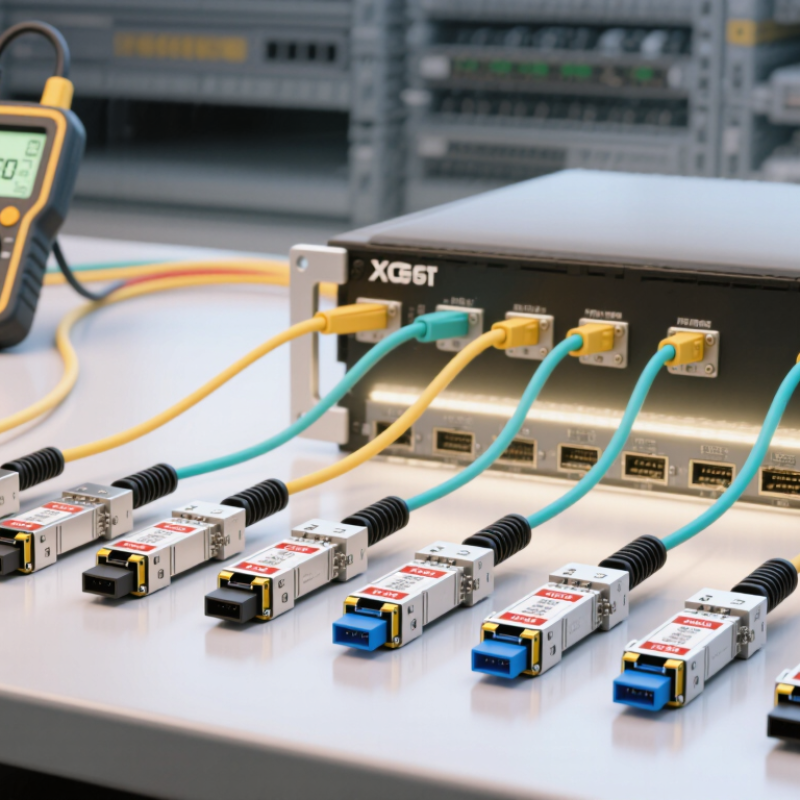
XGS-PON SFP Fundamentals and Key Technical Terms
An XGS-PON SFP is a pluggable optical module for 10-Gbps passive optical networks. XGS-PON supports symmetric 10 Gbps transmission, unlike older asymmetric systems. The module connects a network device to the optical distribution network, or ODN. The ODN includes fiber cables, passive splitters, connectors, and customer-side terminals.
Several technical terms deserve careful attention. The OLT manages the service provider’s side, while the ONU or ONT serves the subscriber. Downstream commonly uses 1577 nm, and upstream commonly uses 1270 nm. Optical budget describes the total loss the signal can tolerate. It includes splitter loss, fiber attenuation, connector loss, and engineering margin. Reach and split ratio also affect real performance. A high split ratio can serve more users, but it reduces available optical power.
The host device must support the module’s electrical interface, control functions, and software behavior. Check SFP cage compatibility, coding requirements, temperature range, and digital optical monitoring. DOM can report transmit power, receive power, voltage, and temperature. Those readings help technicians locate weak connections or dirty end faces. Burst transmission is another key term because upstream users share the fiber. Dynamic bandwidth allocation assigns transmission windows and reduces collisions. Specifications can look perfect on paper. Field conditions are less predictable. I would leave extra optical margin after testing, because connector aging and installation quality are easy to underestimate.
How to Match an XGS-PON SFP with Network Equipment
Matching an XGS-PON SFP starts with the host equipment, not the advertised speed. ITU-T G.9807.1 defines symmetric 10 Gbit/s operation, with 1270 nm upstream and 1577 nm downstream wavelengths. Check whether the OLT accepts an SFP+ optical module and supports XGS-PON firmware. A 10G Ethernet SFP+ is not automatically compatible.
Check the details.
Measure the optical path before ordering. ITU-T XGS-PON classes commonly provide optical budgets around 29 dB for N1 and 31 dB for N2. Choose the class after considering fiber length, splitters, connectors, and aging loss. A 1:64 split may work on paper, yet dirty connectors can remove the margin quickly. I have seen installations pass laboratory tests but fail during rainy-season maintenance.
The module’s EEPROM profile also matters. The host may require specific vendor-neutral identification fields, digital diagnostics, temperature alarms, and transmit-power readings. Broadband Forum TR-309 offers useful guidance for interoperability testing and management behavior. Omdia’s 2024 Fiber Broadband Market Tracker also documents continued migration toward higher-capacity PON access, increasing pressure on upgrade planning. Confirm the equipment’s supported wavelength plan, FEC behavior, reach, and split ratio. Do not rely on the cage label alone. It is an easy mistake. Some compatibility lists are incomplete, so test one module in the actual chassis before purchasing globally.
2026 Best XGS-PON SFP for Global Buyers: How to Match an XGS-PON SFP with Network Equipment
Use the equipment position and optical direction as the first compatibility checks. XGS-PON uses a nominal 9.95328 Gb/s line rate in both directions, with approximately 1577 nm downstream transmission and 1270 nm upstream transmission.
The OLT-side optic normally transmits downstream at 1577 nm and receives upstream at 1270 nm. The ONU-side optic uses the reverse direction. Before purchasing, verify the host port type, supported XGS-PON profile, optical budget, connector, temperature range, management interface, and network reach. The nominal 20 km reach and split ratio are determined by the complete PON design rather than by the SFP alone. Reference: ITU-T G.9807.1.
Optical Performance, Compatibility, and Deployment Requirements
Choosing the 2026 best XGS-PON SFP requires more than checking advertised speed. Optical performance must fit the network design, not just the product page. XGS-PON commonly uses 1270 nm upstream and 1577 nm downstream wavelengths. Verify transmit power, receiver sensitivity, optical return loss, and the stated power budget. A stronger signal is not always better. Excessive optical power can overload sensitive receivers.
Compatibility deserves equal attention. Confirm the module’s SFP or SFP+ form factor, host port requirements, EEPROM information, firmware behavior, and management support. The optical interface should match the OLT architecture and the installed optical distribution network. Check FEC handling, OMCI support, temperature range, and digital optical monitoring. Field testing shows that small firmware differences can cause registration failures, even when the wavelength and connector appear correct. That detail is easy to miss.
Tips: Request a full datasheet and a verified interoperability list. Test one module with the actual OLT, splitter, and fiber length before ordering in volume. Record temperature, receive power, registration time, and alarm behavior. Also inspect connector cleanliness. It matters.
Deployment conditions can change the selection. Outdoor cabinets may require industrial temperature ratings, while dense indoor racks need low power consumption. Long fiber routes require careful loss calculations, including splices and splitters. I would not trust nominal distance alone. Real installations include aging, bending, and imperfect maintenance. A practical evaluation should leave room for these weaknesses.
2026 Best XGS-PON SFP for Global Buyers? - Optical Performance, Compatibility, and Deployment Requirements
| XGS-PON SFP Profile | Typical Deployment | Downstream / Upstream | Nominal Wavelengths | Optical Budget Class | Maximum Reach | Typical Split Ratio | Fiber Interface | Host Compatibility Requirements | Recommended Selection |
|---|---|---|---|---|---|---|---|---|---|
| Standard XGS-PON SFP+ | Residential broadband, small business access, and standard fiber distribution | 10 Gbit/s symmetric line rate | 1577 nm downstream / 1270 nm upstream | N1, approximately 29 dB nominal loss budget | Up to 20 km, subject to optical-loss and timing limits | Up to 1:32 or 1:64, depending on loss engineering | SC/UPC or SC/APC, simplex single-mode fiber | SFP+ cage, XGS-PON MAC support, correct serial/OMCI provisioning, and supported digital diagnostics | Best general-purpose option |
| Extended-Budget XGS-PON SFP+ | Longer distribution paths, higher splitter ratios, and dense access networks | 10 Gbit/s symmetric line rate | 1577 nm downstream / 1270 nm upstream | N2, approximately 31 dB nominal loss budget | Up to 20 km, with greater allowance for passive optical loss | Commonly 1:64; higher ratios require a verified link budget | SC/UPC or SC/APC, simplex single-mode fiber | The host must support the module’s optical class, transmit-power range, thermal load, and management interface | Best for moderate additional loss margin |
| High-Budget XGS-PON SFP+ | Long-reach access, large passive splitters, and difficult outside-plant routes | 10 Gbit/s symmetric line rate | 1577 nm downstream / 1270 nm upstream | E1 or E2, approximately 33 dB or 35 dB nominal budget | Up to 20 km under the XGS-PON timing model; physical distance remains installation-dependent | Potentially up to 1:128, only when the complete loss budget permits it | SC/UPC or SC/APC, simplex single-mode fiber | Verify receiver sensitivity, launch power, burst-mode behavior, heat dissipation, and OLT software support | Best for engineered long-loss links |
| Combo GPON/XGS-PON SFP+ | Phased migration from GPON to XGS-PON on an existing optical distribution network | XGS-PON: 10/10 Gbit/s; GPON coexistence depends on the optical design | XGS-PON: 1577/1270 nm; GPON coexistence typically uses separate legacy wavelength bands | Usually N1 or N2; confirm the exact module profile | Typically up to 20 km, subject to the weakest service and total passive loss | Determined by the existing GPON/XGS-PON optical distribution network | SC/UPC or SC/APC, simplex single-mode fiber | Requires OLT support for dual-mode operation, wavelength coexistence, OMCI behavior, and approved firmware | Best for staged network migration |
| Industrial-Temperature XGS-PON SFP+ | Outdoor cabinets, roadside enclosures, utility networks, and uncontrolled telecom rooms | 10 Gbit/s symmetric line rate | 1577 nm downstream / 1270 nm upstream | N1, N2, E1, or E2 depending on the selected optical design | Up to 20 km within the selected optical class and operating limits | Selected according to the installed loss budget and temperature conditions | SC/UPC or SC/APC, simplex single-mode fiber | Confirm the specified operating range, start-up behavior, power consumption, airflow, and host thermal design | Best for harsh or variable environments |
| Compact Access-Switch XGS-PON SFP+ | Compact aggregation switches, edge platforms, and space-constrained access nodes | 10 Gbit/s symmetric line rate | 1577 nm downstream / 1270 nm upstream | Commonly N1 or N2 | Up to 20 km, dependent on optical budget and timing configuration | Usually 1:32 or 1:64 | SC/UPC or SC/APC, simplex single-mode fiber | Check SFP+ port power limits, host lane configuration, software recognition, and module temperature clearance | Best where port density and thermal efficiency matter |
- Confirm compliance with ITU-T G.9807.1 and the applicable SFP/SFP+ management requirements.
- Calculate total optical loss, including fiber attenuation, connectors, splices, splitters, aging margin, and engineering reserve.
- Verify host-platform interoperability, including firmware recognition, serial-number policy, OMCI behavior, alarms, and digital diagnostics.
- Match the connector polish and optical distribution design; SC/APC and SC/UPC must not be mixed without the correct network components.
- Check operating temperature, power consumption, maximum case temperature, and cooling capacity before deployment.
- Use the optical class with sufficient margin rather than selecting the highest transmit power solely by nominal reach.
Comparing XGS-PON SFP Options for Global Markets
For global buyers, comparing XGS-PON SFP options requires more than checking a 10 Gb/s label. The host device must support the module’s electrical interface, management functions, and expected PON profile. Check upstream and downstream wavelengths, optical budget, reach, and operating temperature. A module rated for 20 km may perform differently on long aerial fiber routes.
Field testing often reveals small details. Digital diagnostics can show transmit power, receiver sensitivity, temperature, and voltage before service fails. This data helps technicians find dirty connectors or weak optical paths.
Look for stable interoperability with the intended OLT platform, especially when equipment comes from different suppliers. Firmware behavior matters too. Some modules pass traffic but report incomplete alarms.
Regional deployment conditions also influence the choice. Buyers in hot climates may need extended-temperature housing and stronger thermal monitoring. Dense urban networks may prioritize compact power use and consistent burst-mode reception. Rural projects often value optical margin over the lowest purchase price. Confirm fiber connector type, authentication support, warranty terms, and replacement availability before ordering. Certification requirements vary by market, so local compliance documents should be reviewed carefully. I have seen projects select impressive specifications, then struggle with host compatibility. That mistake is easy to repeat. A practical sample test remains more reliable than a spreadsheet comparison.
Procurement, Testing, and Lifecycle Management Considerations
2026 Best XGS PON SFP for Global Buyers
Procurement should begin with network evidence, not a low unit price. Confirm the optical class, transmission distance, connector type, and host compatibility before requesting quotations. Ask suppliers for data sheets, calibration records, production traceability, and samples from regular manufacturing batches. A reliable supplier should explain tolerance limits clearly. Vague performance language deserves caution.
Testing should reflect real deployment conditions. Check transmit power, receiver sensitivity, wavelength accuracy, digital diagnostics, and power consumption. Run interoperability tests with the intended OLT and ONU equipment. Repeat tests across temperature ranges, voltage variations, and extended operating periods. Inspect EEPROM information manually, because incorrect coding can cause field failures. Laboratory results are useful, but they cannot reproduce every fiber route or installation habit.
Lifecycle management often receives less attention. Define replacement stock, warranty handling, failure analysis, and technical response times before purchase approval. Maintain serial-number records and installation dates for every module. Regional documentation, packaging, and certification requirements may also affect delivery schedules. A supplier scorecard helps, but it is not perfect. Even a strong audit can miss inconsistent process control. Review failure trends quarterly, and preserve failed units for independent analysis rather than discarding them immediately. Shamefully, many projects measure acceptance only once, then discover compatibility problems after deployment.